

5+ years of experience
Specialized in Cosmetic Dentistry & Veneers
1,000+ successful cases - Personalized Smile Design
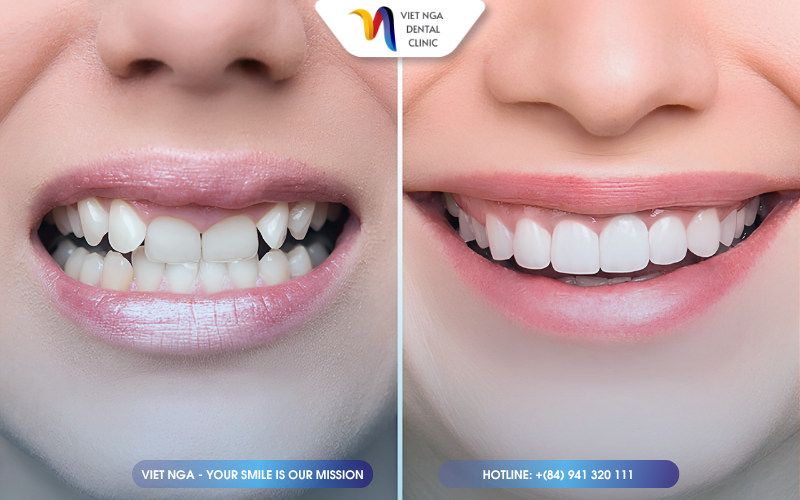
Cosmetic dental treatment is a broad term for techniques that use dental porcelain materials to improve the shape, color, and size of teeth.
There are two main approaches — and the difference between them is more important than many patients realize:
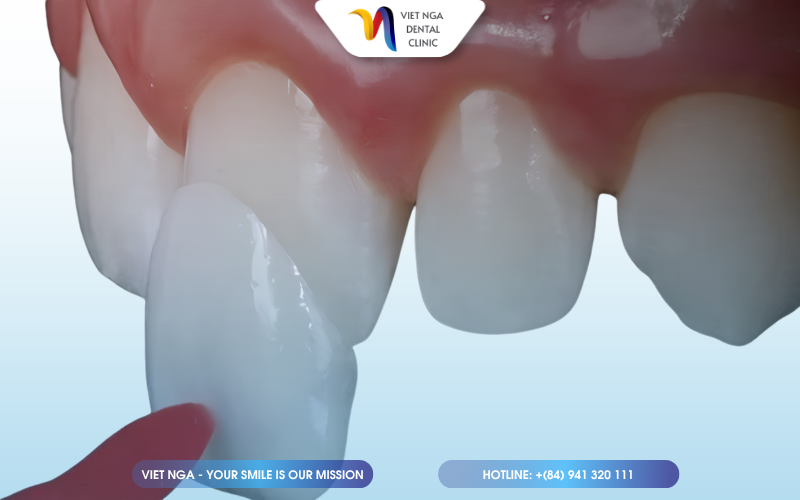
Veneers are ultra-thin porcelain shells, typically around 0.3–0.5 mm thick, that are bonded securely to the front surface of the teeth.
To ensure a secure bond without making the teeth look bulky, the dentist only needs to remove a very thin layer of enamel from the front surface — approximately the same thickness as the veneer being placed.
Most of the natural tooth structure, including the back, sides, and entire root, remains completely intact.
Who may be suitable for porcelain veneers:
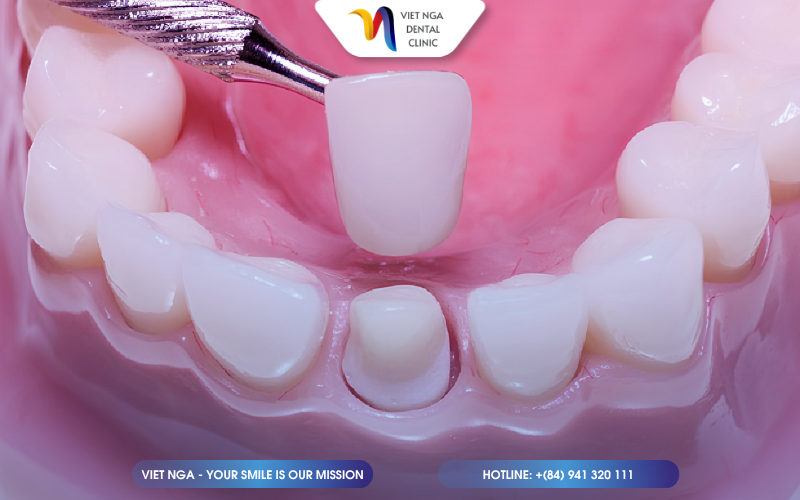
Dental crowns involve preparing the entire remaining visible tooth structure — approximately 1–2 mm around all four surfaces — before placing a complete porcelain “shell” over the outside.
This requires significantly more tooth reduction than veneers.
Who may be suitable for dental crowns:
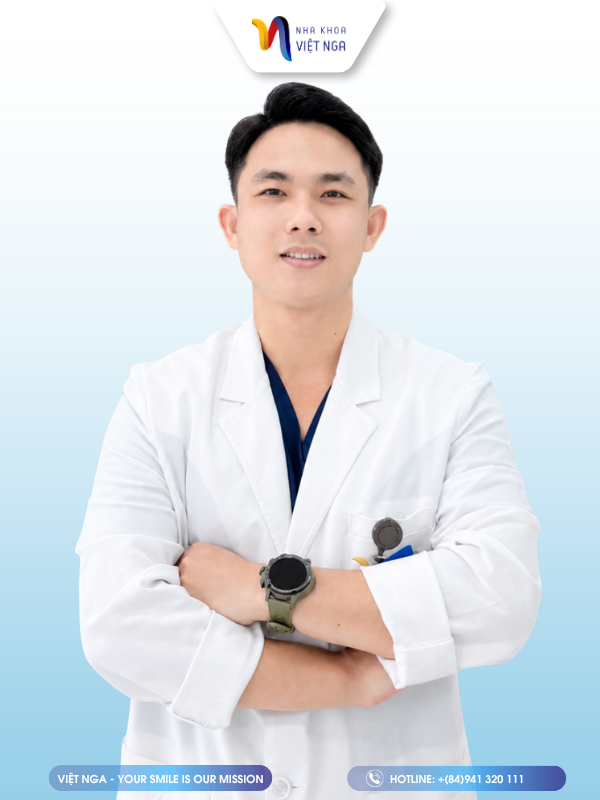
| “My first principle is to preserve as much natural tooth structure as possible. Natural enamel is precious — once it is removed, it cannot be restored. Modern Emax veneers allow me to prepare as little as 0.3 mm while still achieving an excellent, natural-looking aesthetic result.” — Dr. Hau. |
Quick Comparison: Veneers vs. Dental Crowns:
| Criteria | Veneers | Dental Crowns |
| Tooth preparation | 0.3–0.5 mm (front surface) | 1–2 mm (all four surfaces) |
| Natural tooth preservation | High | Lower |
| Best suited for | Teeth with good remaining structure | Root canal-treated or extensively damaged teeth |
| Treatment time | 3–5 days | 5–7 days |
| Expected lifespan | 10–15 years | 10–20 years |
Not all porcelain materials are the same — and there is no single “best” option for every position.
Your dentist may combine different types of porcelain within the same arch to optimize both aesthetics and durability:
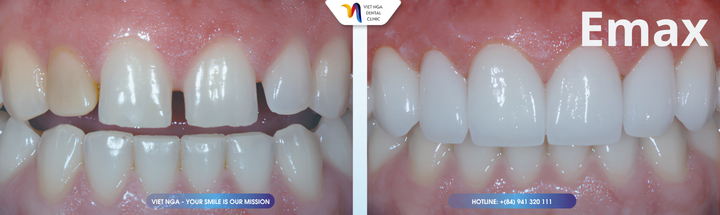
Emax is a pressed lithium disilicate ceramic, currently considered a top-tier material for aesthetic restorations in the front teeth.
It offers translucency and light reflection that closely resemble natural enamel, creating depth and a natural appearance that less translucent ceramic materials cannot achieve.
When Emax veneers are made with the right shade and shape by an experienced dentist, it can be extremely difficult to tell that they are porcelain.
Best suited for: 6–8 upper and lower front teeth when maximum aesthetics are the priority. Expected lifespan of 10–15 years with proper care.
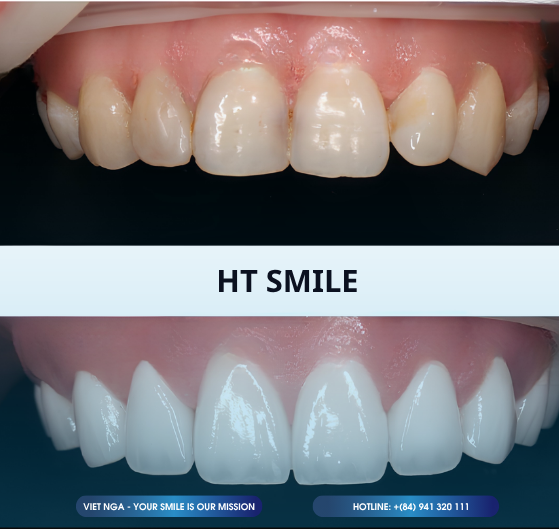
HT Smile is a hybrid ceramic that combines high aesthetics with good strength and resistance to chewing forces. It is suitable for both the front and back teeth.
It is a popular choice for full-arch restorations, especially when some back teeth need to withstand higher chewing forces.
Best suited for: Extensive restorative cases involving multiple teeth, patients with mild teeth-grinding habits, and those looking for a balance between aesthetics and durability.
Expected lifespan of up to 15 years with proper care.
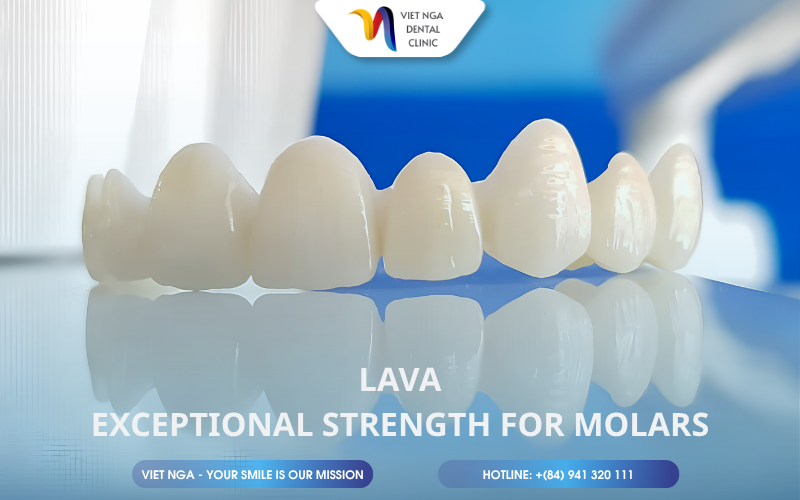
Lava Plus is the strongest ceramic material currently available at Viet Nga Dental Clinic and is highly resistant to fracture under normal chewing forces.
It is less translucent than Emax, making it less suitable for highly aesthetic front-tooth restorations. However, Lava Plus is the gold standard for back teeth that are exposed to heavy chewing forces.
Best suited for: Teeth #5, #6, and #7 (chewing area), patients with severe teeth grinding, and multi-unit dental bridges. Expected lifespan of up to 20 years with proper care.
Porcelain-fused-to-metal (PFM) is an older technology dating back to the 1980s. After 3–5 years, the metal margin underneath may become visible along the gumline, creating a noticeable dark line that significantly affects aesthetics.
Therefore, most cases at Viet Nga use all-ceramic restorations without an internal metal framework.
The cost depends on the number of teeth, the type of ceramic material, and the treatment method (veneer or crown).
At Viet Nga, prices are quoted as a clear, all-inclusive package before treatment begins:
| Porcelain type | Reference price / tooth |
| Zirconia/Cercon HT | VND 4,000,000–5,000,000 |
| HT Smile/Nacera Q3 | VND 8,000,000–10,000,000 |
| Lava Plus/Orodent | VND 12,000,000–15,000,000 |
| Emax/Lisi Press | VND 6,000,000–10,000,000 |
5 factors that affect the actual cost:
Comprehensive consultation: the dentist will determine whether veneers or crowns are appropriate, which type of porcelain is suitable, and how many teeth will provide the most natural-looking result.
At Viet Nga Dental Clinic, the dentist will often recommend fewer teeth than patients initially expect if the desired aesthetic result can be achieved with fewer restorations.
The porcelain shade is then selected using the standard Vita shade guide. Once the patient has chosen the preferred type of restoration, a 3D scan or dental impression will be taken to analyze proportions.
At Viet Nga Dental Clinic: After selecting the shade and shape, the dentist can create a smile design so you can preview your expected smile result within just a few minutes.
If you do not like the result, changes can be made immediately at no additional cost.
Local anesthesia is used throughout the procedure — no pain.
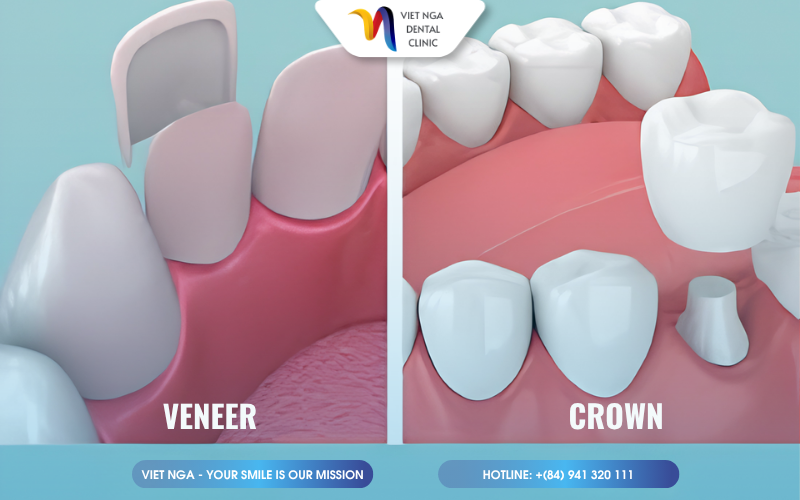
Veneers: 0.3–0.5 mm of enamel is prepared from the front surface, while the entire back and sides remain intact. Crowns: approximately 1–2 mm is prepared from all four surfaces.
Time: 30–60 minutes depending on the number of teeth.
After the anesthesia wears off (3–5 hours): mild sensitivity may occur for 1–2 days due to the enamel preparation — after that, things should return to normal.
Immediately after tooth preparation, the dentist will place temporary teeth so that you do not experience gaps or sensitivity while waiting for the final restorations from the laboratory.
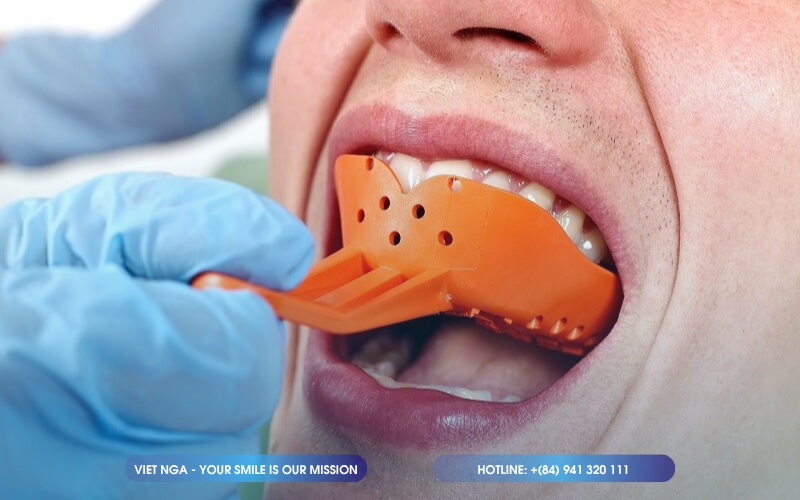
After tooth preparation, the dentist will take an accurate dental impression using precision impression materials or digital scanning.
The resulting data is sent to the dental laboratory, where each porcelain restoration is fabricated according to the agreed shade, shape, and dimensions.
Laboratory time: Usually 3–5 working days. During this time, you will wear temporary teeth and can eat and drink normally (while avoiding very hard foods), with no major restrictions on daily activities.
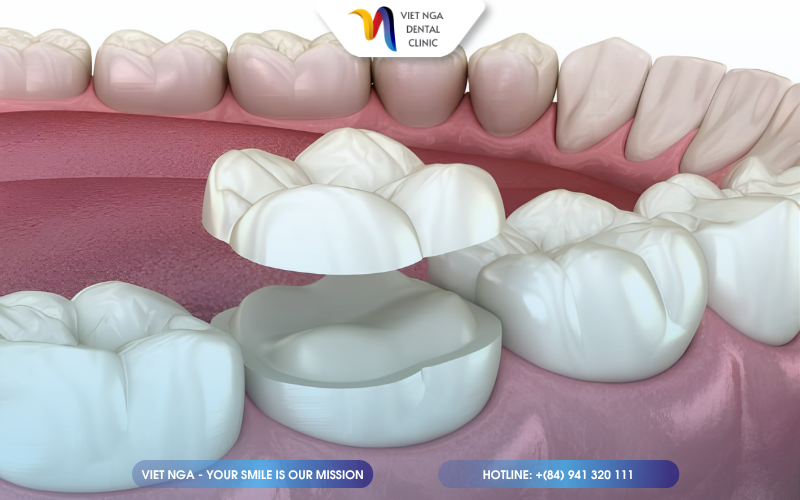
When the restorations arrive from the laboratory, the dentist will try each one in place before permanent bonding.
This includes checking the shade under different lighting conditions, evaluating shape and proportions, and ensuring an accurate bite.
You will inspect and approve the restorations before they are permanently bonded.
If anything is not satisfactory — such as the shade or shape — the dentist will make the necessary adjustments before permanent bonding. The procedure only proceeds once you confirm that you are 100% satisfied.
1. Permanent bonding is performed using specialized resin cement — without pain.
2. After bonding: The dentist will perform a final bite check and make adjustments if necessary. After the restorations are bonded, you can eat and drink normally starting the following day.
Follow-up after 1 week to check that the gums are adapting to the new restorations and that you are not experiencing any discomfort.
Further follow-ups: 1 month and 6 months. After that: routine check-ups every 6 months combined with professional scaling.
Modern Emax porcelain has translucency and light reflection similar to natural enamel. Under ideal conditions, it can be extremely difficult to distinguish porcelain restorations from natural teeth.
A “fake,” uniformly bright-white appearance is usually caused by selecting a shade that is too white and does not harmonize with the patient’s skin tone and hair color.
It may also result from tooth shapes and proportions that do not match the individual’s facial structure.
At Viet Nga Dental Clinic, the dentist spends significant time on shade selection and precise smile design for exactly this reason.
Emax veneers can last 10–15 years with proper care. After that, replacement may be necessary
— but because the enamel was already prepared during the initial treatment, replacement typically requires less preparation or may not require additional tooth reduction.
Proper care helps extend their lifespan: do not use your front teeth to bite hard objects such as sugarcane, bottle caps, or bones; brush using proper technique;
attend follow-up appointments and professional scaling every 6 months; and use a night guard if you grind your teeth while sleeping.
Dentists at Viet Nga Dental Clinic generally recommend starting with the minimum number of teeth necessary to achieve the desired result.
When you smile, only about 6–8 front teeth are typically visible.
Therefore, treating 6–8 upper front teeth is often enough to significantly transform the overall impression of your smile, while costing considerably less than treating 14 teeth across the entire arch.
Tetracycline staining (from antibiotics) during tooth development creates a uniform brown or gray discoloration from within the enamel.
Whitening treatments, regardless of the method, cannot fully address this type of staining because bleaching agents cannot penetrate deeply enough into the enamel to break down pigment molecules that became “locked” in during mineralization.
Emax veneers are an optimal solution for completely masking the underlying discoloration while creating a naturally white smile.
This is one of the common reasons patients seek treatment at Viet Nga Dental Clinic.
This is one of the reasons many patients from Ho Chi Minh City and overseas Vietnamese choose Viet Nga Dental Clinic in Vung Tau:
The entire process, from consultation to permanent bonding, takes approximately 5 days.
No need for multiple trips. Combining dental treatment with a beach getaway is one of the reasons this model is highly valued by patients from Ho Chi Minh City and overseas Vietnamese for its time efficiency.
Many clinics tend to recommend dental crowns (which require more tooth reduction and often cost more) even when veneers may be sufficient.
Viet Nga takes the opposite approach: recommending the least invasive treatment possible to achieve the desired result.
This may sometimes mean lower revenue — but it is an approach Viet Nga Dental Clinic is willing to take for the benefit of its patients.
Your smile will be analyzed and the expected result simulated before treatment begins. This makes it easier to communicate with the dentist and agree on the most appropriate treatment plan.
Viet Nga Dental Clinic uses genuine dental porcelain materials with clear origins and warranty cards.
You will receive detailed information about the type of porcelain, warranty period, and post-treatment care instructions. This provides peace of mind and confidence throughout your dental treatment journey.
The dental team consists of formally trained dentists specializing in Oral and Maxillofacial Dentistry, with many years of experience in aesthetic restorative dentistry.
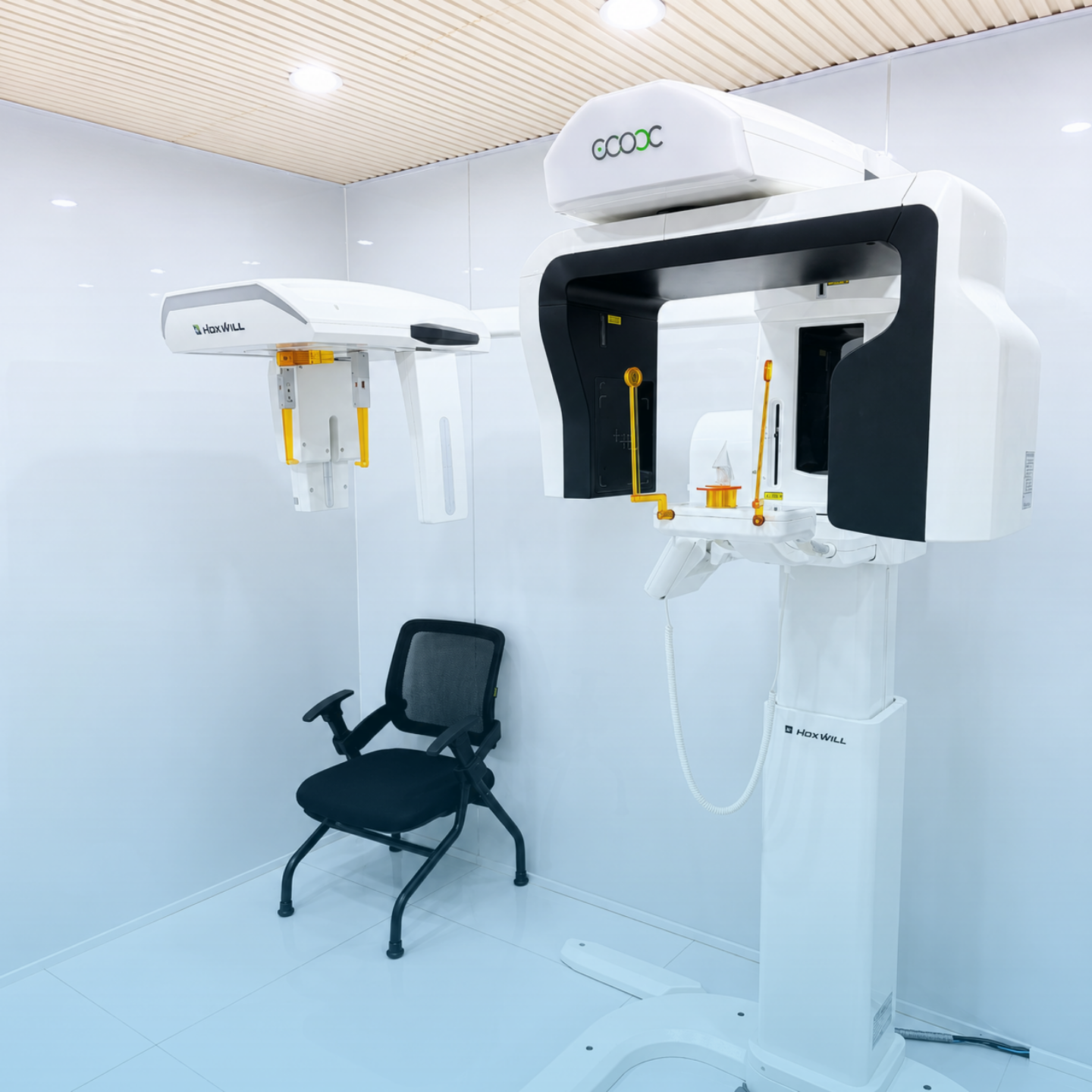
Treatment is supported by Cone Beam 3D CT, digital scanning technology, and Smile Design procedures, helping improve accuracy and personalize treatment for each patient.
VIET NGA DENTAL CLINIC PATIENT CASE 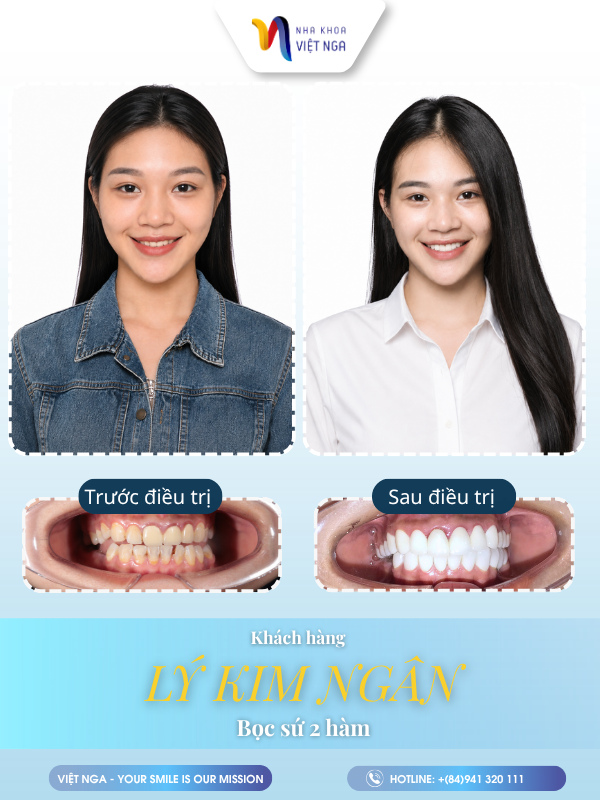
Ms. Kim Ngan — Full-Arch Dental Crowns
“ I always wanted a beautiful smile that still looked natural. Dr. Hau explained everything in detail and helped me choose the right treatment option. The result was exactly what I wanted — my teeth look harmonious with my face without feeling artificial. That is what I am most satisfied with.”
1. Does getting dental crowns or veneers hurt?
No. The dentist uses local anesthesia during tooth preparation. After the anesthesia wears off, mild sensitivity may occur for 1–2 days due to the enamel preparation
— this is normal and usually resolves on its own.
While wearing temporary teeth, you may feel some slight discomfort for the first 1–2 days before getting used to them.
2. Which is the most beautiful: Emax, HT Smile, or Lava Plus?
Emax offers the best aesthetics, with the highest translucency and most natural appearance.
HT Smile provides a balance of aesthetics and durability and is suitable for full-arch restorations. Lava Plus offers the greatest strength and is best suited for back teeth.
3. Can veneers or porcelain crowns break?
Emax is harder than natural enamel (according to the Mohs scale). Therefore, it does not normally fracture during everyday activities.
Fracture may occur if you bite directly into extremely hard objects such as bones or hard plastic — something that should also be avoided with natural teeth.
4. How many teeth are enough to transform my smile?
The answer depends on your “smile line” — the number of teeth visible when you smile naturally. Usually, 6–8 upper front teeth are enough to create a significant transformation.
At Viet Nga Dental Clinic, the dentist will photograph and analyze your smile specifically during the consultation.
5. Do I need to avoid any foods after getting dental restorations?
After permanent bonding, you can eat and drink normally. Simply avoid using your front teeth to bite directly into hard objects such as sugarcane, hard guava, or bottle caps.
There are no general restrictions on hot or cold foods and drinks or colored beverages.
6. Will porcelain teeth become yellow over time?
All-ceramic restorations such as Emax and Zirconia do not become yellow — this is a major advantage compared with natural teeth and composite materials.
The porcelain shade remains stable throughout its expected lifespan, even if you drink coffee or tea every day.
7. I live in Ho Chi Minh City. Is it inconvenient to travel to Vung Tau for treatment?
No. The entire treatment process can be completed in approximately 5 days.