

Metal Braces
Metal braces are one of the most widely used and established orthodontic treatment methods. They can address various degrees of tooth misalignment, from overbite and underbite to deep bite.
This article explains the working mechanism, advantages, limitations, and price of metal braces at Viet Nga Dental Clinic.
1. What Are Metal Braces?
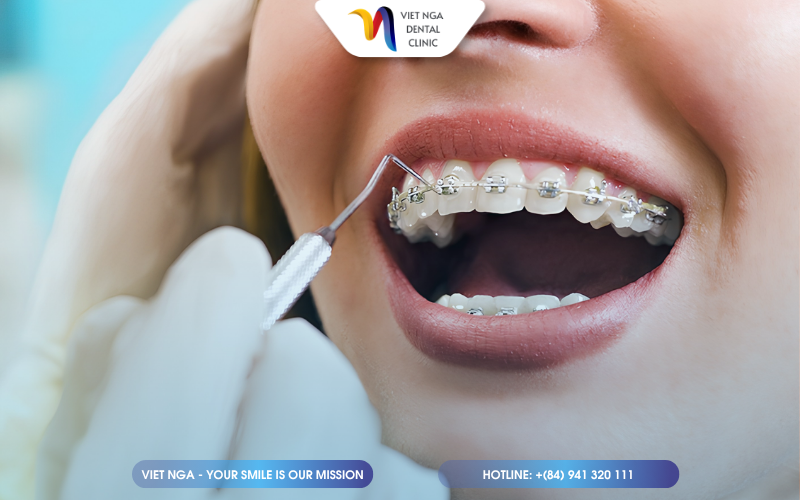
Metal braces consist of small brackets bonded to the surface of the teeth and an archwire running through the brackets to apply controlled forces that gradually move the teeth.
This traditional orthodontic method is highly effective for cases ranging from simple to complex, including underbite correction in children.
Advantages
- Generally more affordable than clear aligners for cases of similar complexity.
- Suitable for a wide range of tooth misalignments, including complex cases.
- Treatment effectiveness does not depend on the patient’s ability to wear the appliance for a specific number of hours, as the brackets remain fixed to the teeth.
Limitations
- Less aesthetically discreet than clear aligners because the brackets are visible on the teeth.
- Extra care is needed when eating to avoid loosening or breaking the brackets.
- Oral hygiene can be more challenging due to brackets and archwires, requiring specialized cleaning tools.
Aesthetic Upgrade: Ceramic Braces
Ceramic braces are an aesthetic upgrade based on the same orthodontic principle as metal braces. Their tooth-colored appearance makes them less noticeable during communication.
At Viet Nga, upgrading to ceramic braces costs an additional 5,000,000 VND per treatment plan compared with standard metal braces.
2. How Do Metal Braces Work?
The archwire applies continuous force through the brackets, gradually moving the teeth toward their planned positions over time.
During treatment, the dentist periodically adjusts the archwire and orthodontic forces — commonly referred to as tightening — to maintain the planned tooth movement.
Learn more about orthodontic treatment on the Orthodontic Treatment Overview page.
3. Who Is Suitable for Metal Braces?
According to Viet Nga’s recommended age guidelines, metal braces are available for patients 11 years and older.
This method can be used for various degrees of tooth misalignment, including complex cases.
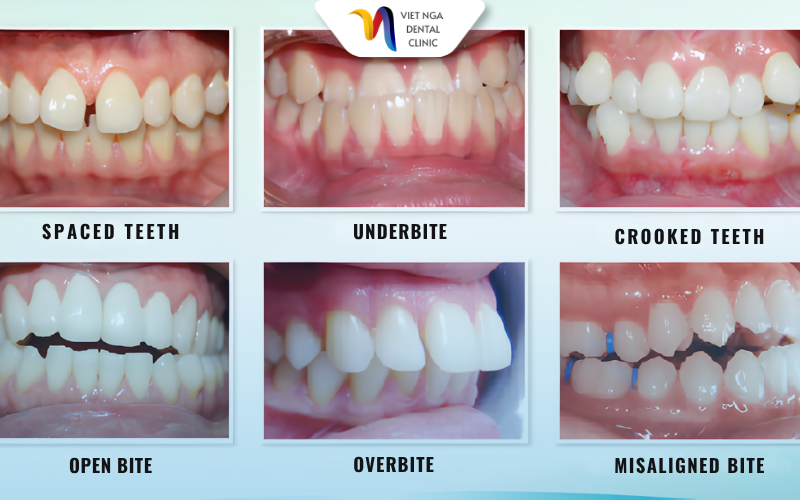
Your suitability for treatment will be determined by the dentist through an individual examination. Below are some common orthodontic conditions treated at Viet Nga Dental Clinic.
4. Treatment Process
- Initial examination to assess the teeth and bite.
- Diagnostic imaging as recommended by the dentist.
- Placement of brackets and archwire.
- Regular follow-up appointments for archwire adjustments and force control.
- Removal of braces once treatment is completed.
- Retainer wear as recommended, if applicable, to help maintain the treatment results.
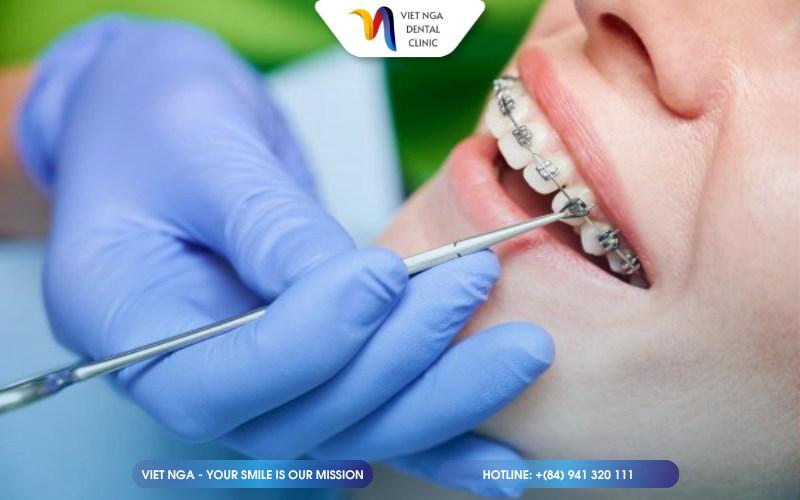
Caring for Your Teeth During Metal Braces Treatment
While wearing braces, you should maintain thorough oral hygiene after every meal, limit hard or sticky foods that may loosen brackets, and use an orthodontic toothbrush, dental floss, and other specialized cleaning tools as recommended by your dentist.
5. Metal Braces Price List at Viet Nga
| Case Complexity | Price |
|---|---|
| Simple | 20,000,000 VND |
| Complex | 45,000,000 VND |
- Recommended age: 11 years and older.
- Average treatment time: 18–24 months.
- Ceramic braces upgrade: Additional 5,000,000 VND per treatment plan.
The complexity of each case is determined by the dentist based on a clinical examination and diagnostic imaging, taking into account the actual tooth alignment and bite condition.
FREQUENTLY ASKED QUESTIONS
1. What is the difference between metal braces and ceramic braces?
Both are fixed orthodontic appliances and work using the same basic mechanism: the archwire applies controlled forces to move the teeth, while the dentist adjusts the forces during follow-up appointments.
The main differences are the material and aesthetics. Metal braces have a silver-colored appearance and are more noticeable, while ceramic braces are closer in color to natural teeth and therefore less visible.
Ceramic braces require an additional 5,000,000 VND per treatment plan.
The right choice depends on each patient’s aesthetic preferences and budget.
2. Are metal braces painful?
Mild tooth soreness or pressure is common during the first few days after braces are placed or following an adjustment appointment.
The level of discomfort varies from person to person. Brackets and archwires may also rub against the cheeks or lips during the initial adjustment period.
If discomfort persists, contact the dental clinic for an evaluation.
3. How often do I need follow-up appointments for adjustments?
The frequency of follow-up appointments depends on the individual treatment plan developed by the dentist based on the actual rate of tooth movement.
Following the recommended appointment schedule is important for keeping treatment on track. If you are unable to attend an appointment, contact the clinic in advance to reschedule.
4. Can I eat normally while wearing metal braces?
You can continue eating relatively normally, but you should avoid certain foods that may loosen brackets or damage the archwire, such as very hard or sticky foods.
You should also avoid directly biting hard foods with your front teeth.
Your dentist will provide more specific dietary recommendations during your consultation.
5. Can teeth shift again after braces are removed?
After completing orthodontic treatment, the dentist will generally recommend wearing a retainer to help keep the teeth stable in their new positions.
Following the retainer instructions is important for maintaining long-term treatment results. Without proper retainer use, teeth may gradually shift back over time.
Book a consultation so our dentist can assess your dental condition and determine the most appropriate orthodontic treatment option for you.