

Wisdom Tooth Extraction: Does It Hurt and How Much Does It Cost?
Wisdom teeth are a common source of concern for many people — they worry about pain and wonder whether removal is actually necessary.
The following guide explains when wisdom tooth removal may be recommended, what the procedure involves at Viet Nga Dental Clinic, and what you should know beforehand.
1. What Are Wisdom Teeth?
Wisdom teeth (third molars) are the last set of molars to develop, typically appearing between the ages of 17 and 25.
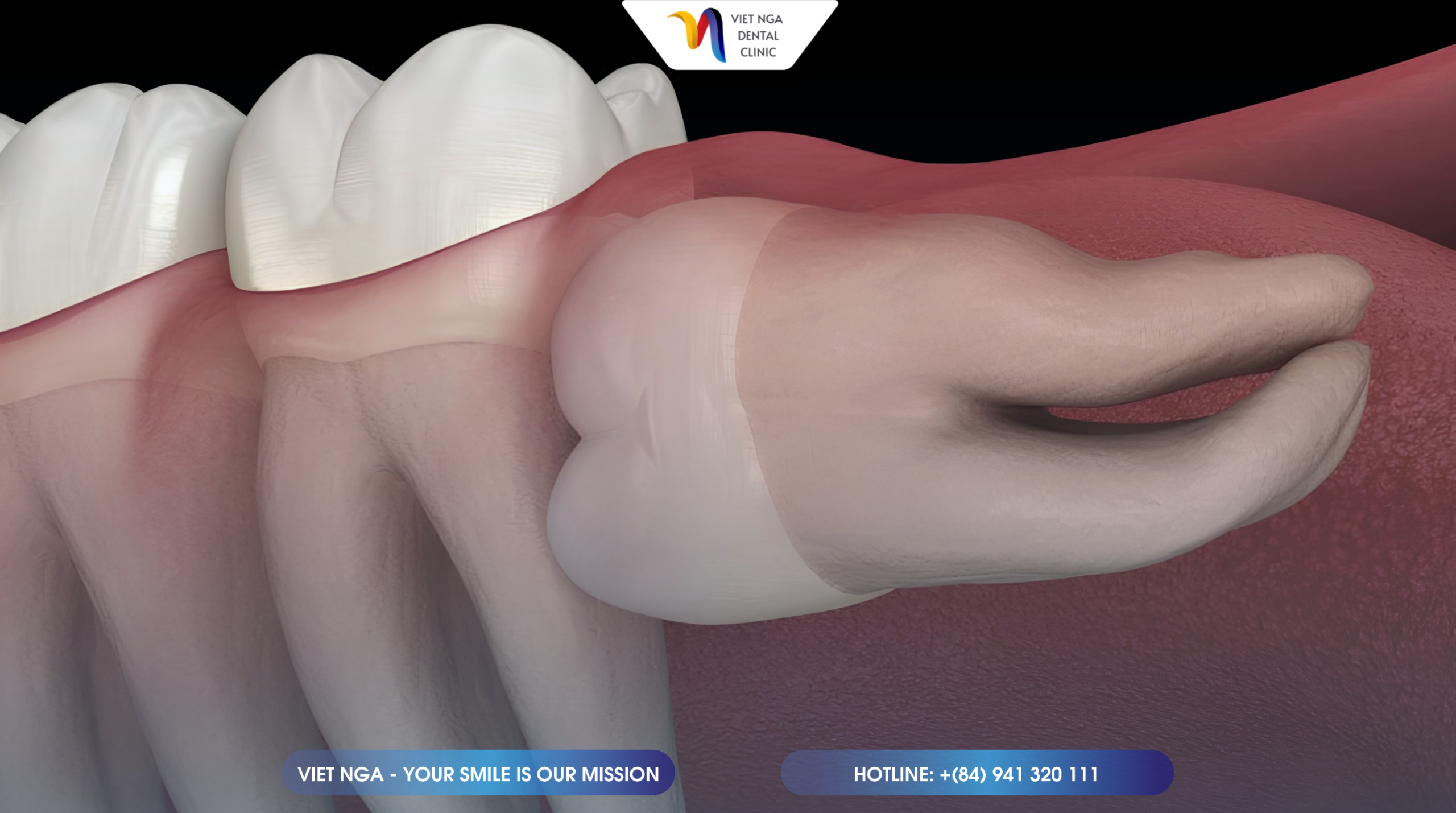
Because they erupt after the jaw has nearly completed its development, there may not be enough space for wisdom teeth to grow normally. As a result, they may become impacted, tilted, or only partially erupted.
2. When Should Wisdom Teeth Be Removed?
Impacted or Misaligned Wisdom Teeth
When there is insufficient space, a wisdom tooth may grow at an angle and press against the second molar. This can cause pain and may increase the risk of damage to the neighboring tooth if left untreated.
Impacted Wisdom Teeth
In some cases, a wisdom tooth remains completely or almost completely beneath the gum and jawbone, preventing it from erupting normally.
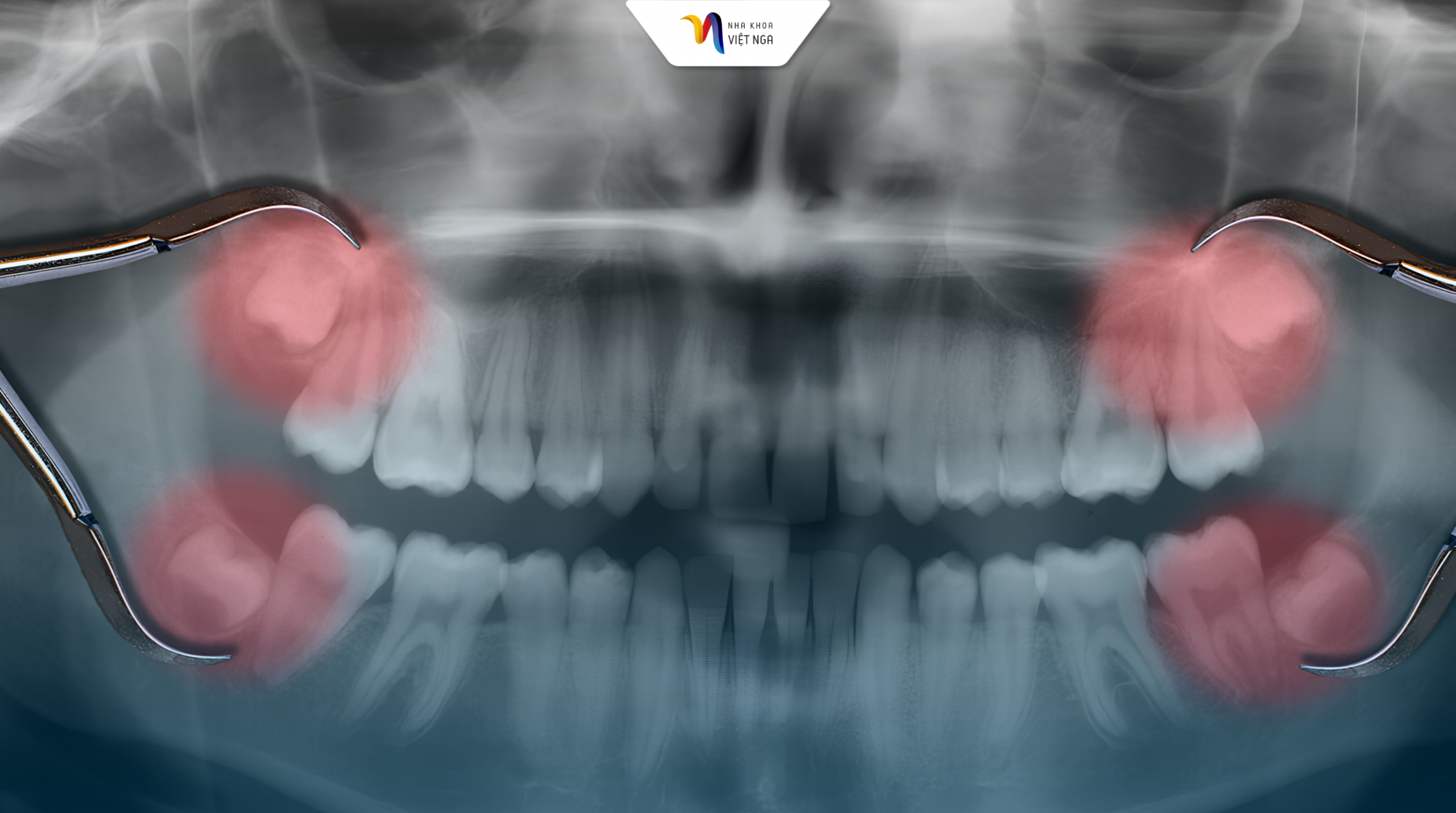
Impacted wisdom teeth are often difficult to detect visually and require diagnostic imaging to determine their exact position.
Recurrent Inflammation or Difficulty Cleaning
Because wisdom teeth are located at the very back of the mouth, particularly when they are partially erupted or misaligned, they can be difficult to clean thoroughly with a regular toothbrush.
Food can easily become trapped around the tooth, creating an environment for bacteria to grow and potentially leading to recurrent inflammation of the surrounding gum tissue or infection.
3. What Happens If You Don’t Remove a Wisdom Tooth?
Not every wisdom tooth needs to be removed.
If a wisdom tooth is properly aligned, has sufficient space, does not put pressure on the neighboring teeth, and can be cleaned effectively, your dentist may recommend keeping it and monitoring it regularly rather than removing it immediately.
The decision to remove or retain a wisdom tooth should be based on a dentist’s clinical examination and dental imaging. It should not be determined through self-assessment at home.
Signs That a Wisdom Tooth May Be Causing Problems
- Pain or discomfort in the back of the jaw, which may radiate toward the ear or jaw angle
- Red, swollen gums around the wisdom tooth, with pain when chewing or opening the mouth
- Mild fever or persistent bad breath accompanied by inflammation around the gum
- Difficulty opening the mouth or pain when chewing on one side
- Signs of damage to the second molar, such as unusual pain or sensitivity
If you experience one or more of these symptoms, it is advisable to see a dentist promptly rather than relying only on temporary pain relief, as inflammation around a wisdom tooth may recur if the underlying cause is not addressed.
4. The Role of Diagnostic Imaging Before Wisdom Tooth Removal
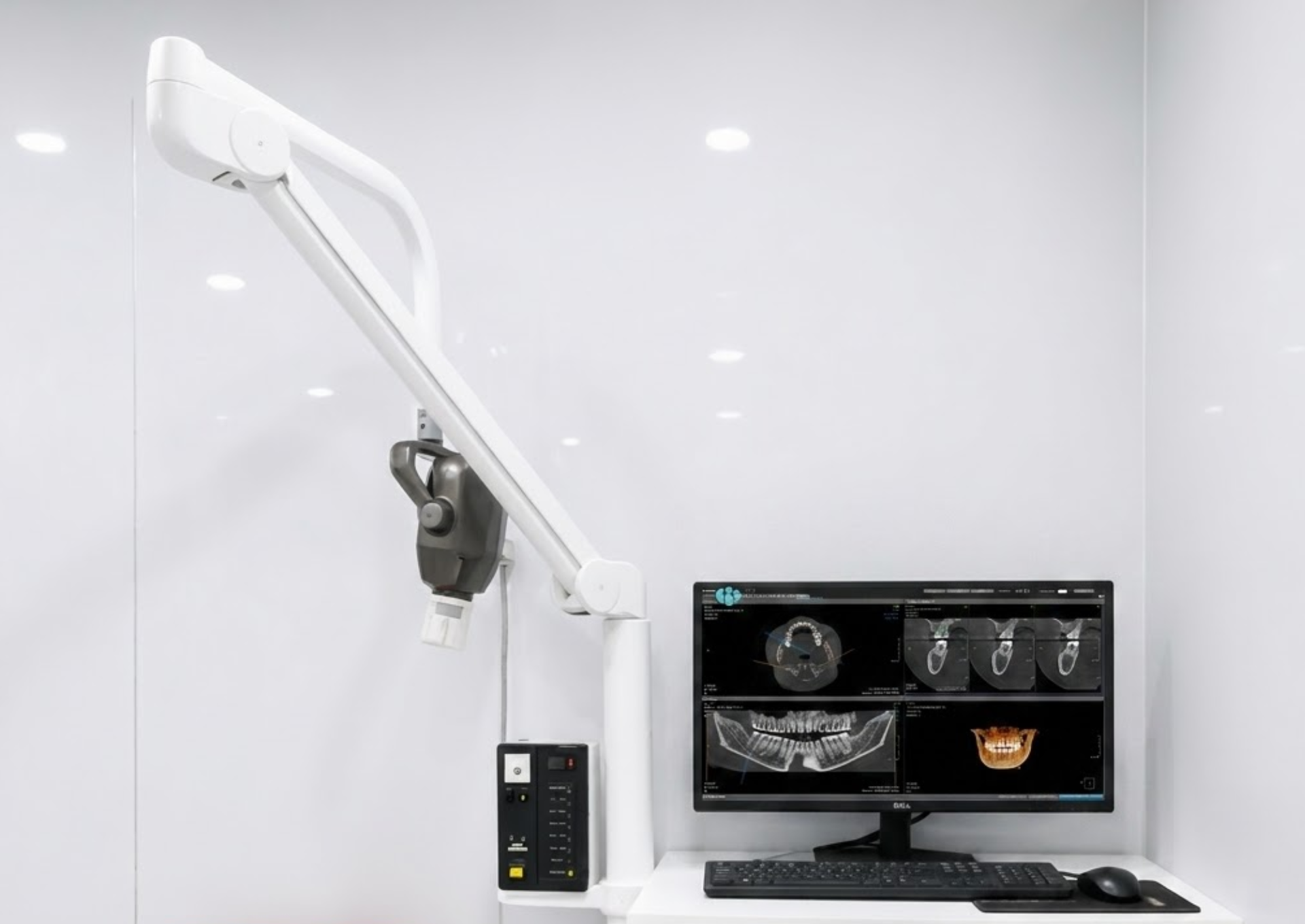
Before deciding whether to remove a wisdom tooth, the dentist may recommend dental imaging to assess its exact position, direction of eruption, and relationship with surrounding structures, such as the lower jaw nerve:
- Panoramic X-ray (Panorex): provides an overview of the entire jaw and helps determine the general position and direction of wisdom tooth eruption.
- 3D Cone Beam CT: provides more detailed three-dimensional images, helping assess complex impacted wisdom teeth or cases located close to the nerve more accurately.
Comprehensive diagnostic imaging helps the dentist develop a more appropriate treatment plan, particularly for severely impacted or misaligned wisdom teeth.
5. Does Wisdom Tooth Removal Hurt? Is It Safe?
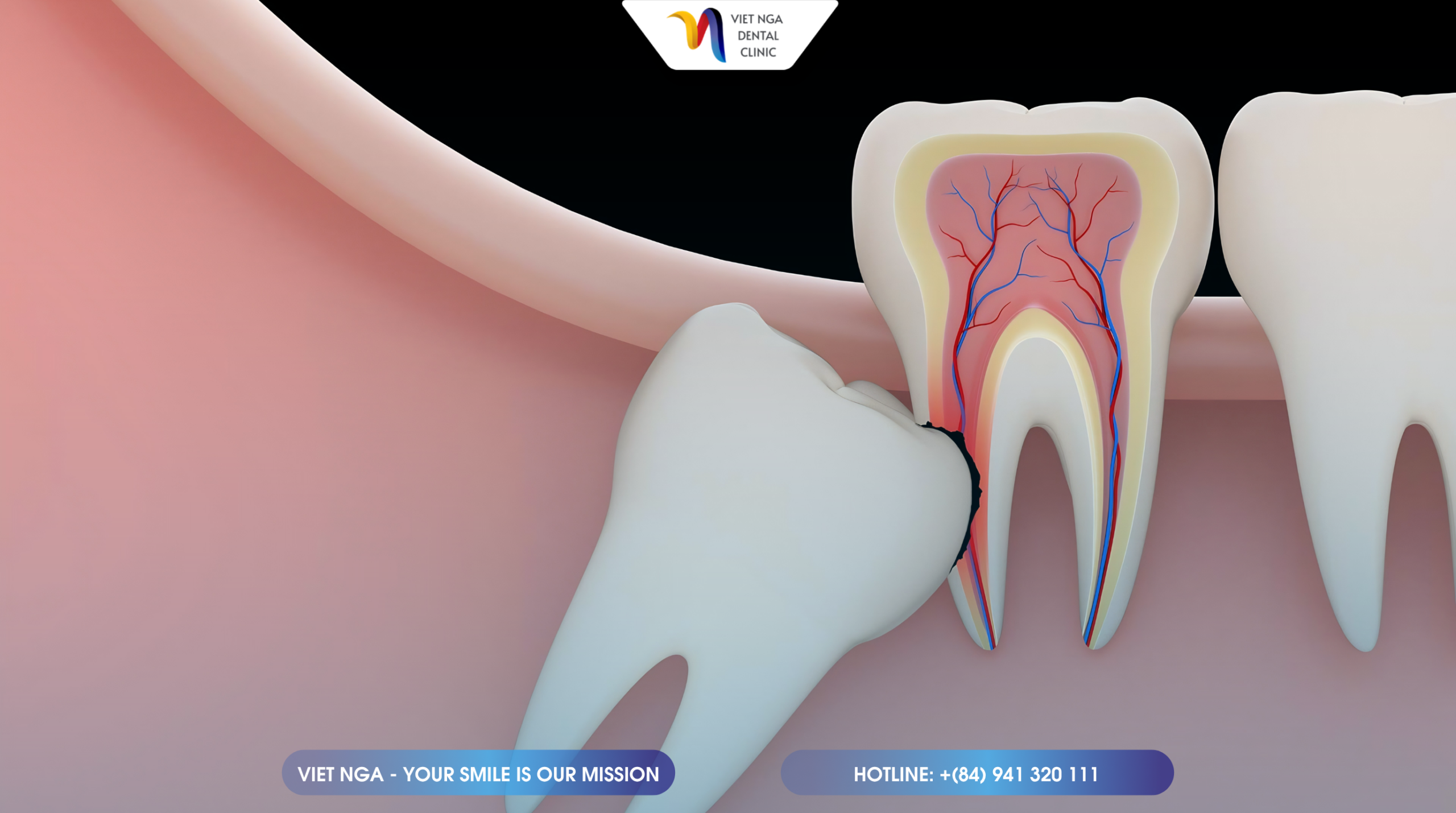
Wisdom tooth removal is performed under local anesthesia to minimize pain and discomfort during the procedure.
Once the anesthetic wears off, mild pain and swelling around the extraction site are common.
The level of discomfort varies depending on the complexity of the extraction — a normally erupted wisdom tooth is generally much simpler to remove than an impacted one.
In terms of safety, thorough diagnostic imaging before the procedure allows the dentist to assess potential risk factors and plan the appropriate approach.
As with any dental procedure, wisdom tooth removal may involve certain risks.
A thorough examination, appropriate imaging, and treatment by a qualified dental professional are important for minimizing potential complications.
6. What Is the Wisdom Tooth Removal Process?
- Examination and diagnostic imaging — the dentist evaluates the position, direction of eruption, and complexity of the wisdom tooth.
- Local anesthesia — the area is fully numbed before the procedure begins.
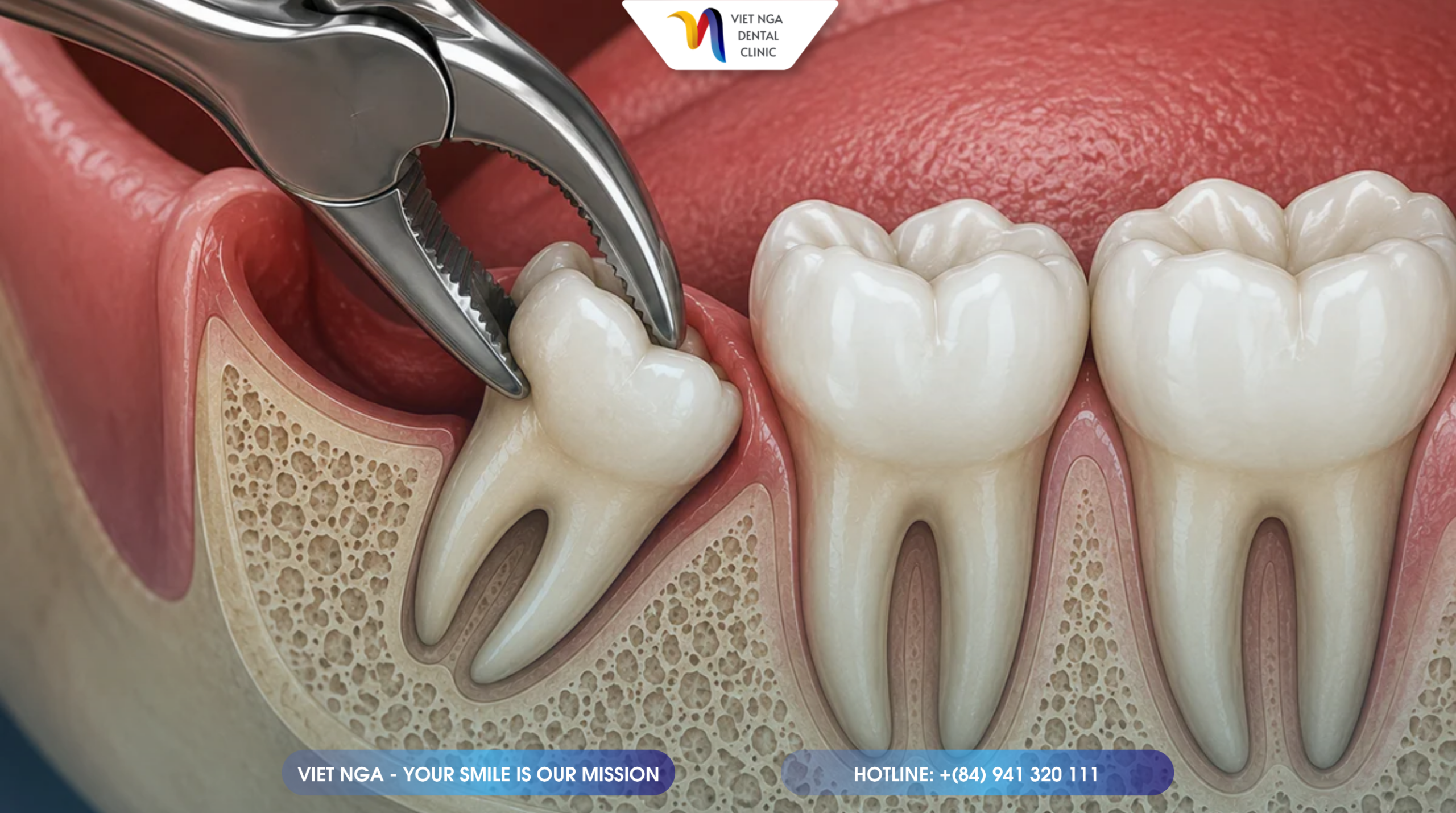
- Tooth removal — for impacted or misaligned teeth, the dentist may need to make a small gum incision or section the tooth into smaller pieces to remove it safely while minimizing disruption to surrounding tissue.
- Wound closure, if necessary, and post-extraction care instructions.
7. Aftercare Following Wisdom Tooth Removal
Managing Swelling and Discomfort During the First Few Days
Mild swelling and a dull ache during the first 1–3 days are common after wisdom tooth removal, particularly following the removal of an impacted or misaligned tooth.
Applying a cold compress to the outside of the cheek on the first day and following the dentist’s prescribed medication, if any, can help manage these symptoms.
Diet and Oral Hygiene
- Eat soft, cool foods for the first few days and avoid chewing directly on the extraction site
- Avoid vigorous rinsing or frequent spitting during the first 24 hours to avoid disturbing the blood clot at the extraction site
- Maintain gentle oral hygiene, avoiding direct brushing over the extraction site
- Do not smoke during the healing period
Signs That Require Prompt Dental Attention
- Persistent bleeding that does not stop after several hours
- Increasing swelling or pain instead of gradual improvement after a few days
- High fever, pus, or unusual odor from the extraction site
- Persistent numbness of the lip or chin after the anesthetic has worn off
These signs should be assessed by a dentist promptly rather than treated on your own at home.
8. Wisdom Tooth Removal Cost at Viet Nga Dental Clinic
| Service | Unit | Price |
|---|---|---|
| Removal of a normally erupted wisdom tooth No. 8 | Tooth | 1,000,000 VND |
| Removal of a 45-degree impacted wisdom tooth No. 8 | Tooth | 2,000,000 VND |
| Removal of a 90-degree impacted wisdom tooth No. 8 | Tooth | 3,000,000 VND |
Pricing is based on the degree of eruption difficulty, as misaligned or impacted wisdom teeth generally require more complex techniques and more treatment time than normally erupted teeth.
The exact eruption position will be determined through diagnostic imaging* before removal.*
Platelet-Rich Fibrin (PRF) — Optional Supportive Treatment
| Service | Unit | Price |
|---|---|---|
| Platelet-Rich Fibrin (PRF) preparation | Session | 1,000,000 VND |
PRF is a technique that separates platelet-rich fibrin from the patient’s own blood, which may support faster wound healing and may be considered as an additional supportive option in certain tooth extraction cases.
This is an optional service and is not required for every wisdom tooth removal. The dentist will assess whether it may be appropriate for your specific case.
Why Patients Choose Viet Nga Dental Clinic for Wisdom Tooth Removal
Viet Nga places strong emphasis on comprehensive diagnostic imaging before wisdom tooth removal, particularly for complex impacted or misaligned teeth.
This allows the dentist to accurately assess the tooth’s position and develop an appropriate treatment plan for each case.
Thorough examination before treatment is an important factor in supporting a safer extraction process and reducing the risk of complications.
Book a consultation and wisdom tooth removal at:
Viet Nga Dental Clinic 01 — 113 Nguyen Van Troi Street, Vung Tau Ward — Hotline: 0941 320 111
Viet Nga Dental Clinic 02 — Chi Linh DIC Urban Area, D1 Nguyen Huu Canh Street (opposite Seaview 1) — Hotline: 0857 168 279
[Book a Consultation] · [Contact Viet Nga for a Personalized Wisdom Tooth Assessment]
FREQUENTLY ASKED QUESTIONS
1. What foods should I avoid after wisdom tooth removal, and for how long?
It is recommended to eat soft, cool foods during the first few days and avoid hard, chewy, spicy, hot, or greasy foods until the extraction site has healed sufficiently.
The recommended recovery period varies from person to person. Your dentist will provide specific guidance during follow-up visits.
2. Can wisdom tooth removal affect the neighboring second molar?
Properly performed wisdom tooth removal should not affect the second molar.
On the contrary, if a wisdom tooth grows at an angle and presses against the second molar without treatment, the wisdom tooth itself may cause damage to the neighboring tooth over time.
3. How long is swelling and pain normal after wisdom tooth removal?
Swelling and discomfort typically begin to decrease within the first 3–5 days. If the swelling or pain does not improve or starts getting worse after several days, you should return to the dental clinic for an evaluation.
4. What is the role of PRF in wisdom tooth removal?
PRF is a technique that separates platelet-rich fibrin from the patient’s own blood, which may support faster wound healing and may be considered as an additional supportive option in certain tooth extraction cases.