



6+ years of experience · Orthodontic Certification
- Specializes in treating Class II/III malocclusion, crowded teeth, and deep bite.
- Specializes in fixed braces and clear aligner treatment.
Orthodontic treatment (or orthodontics) is the process of using gentle, continuous forces to gradually move teeth into their proper positions within the dental arch and correct the bite.
It does not involve surgery or general anesthesia. Contrary to what many people may imagine, orthodontic treatment does not “bend” or forcibly pull teeth out.
These forces are created by archwires, elastic bands, and brackets fixed to the teeth, or by a series of removable clear aligners.
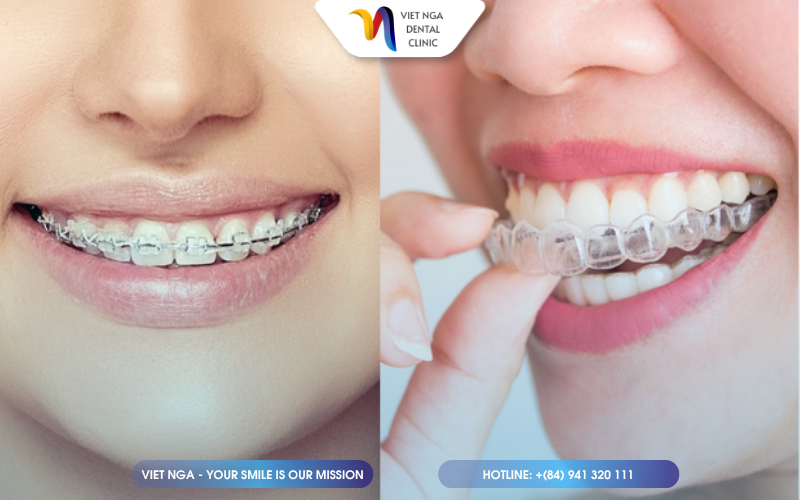
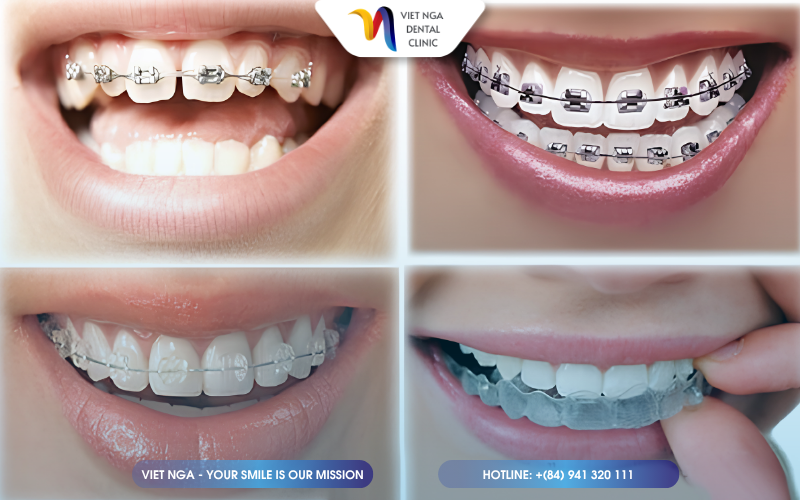
Braces consist of brackets bonded to individual teeth and connected by archwires to apply controlled forces.
Three common types include:
– Metal braces (cost-effective and highly effective for complex cases)
– Ceramic braces (tooth-colored and more discreet)
– Self-ligating braces (designed to reduce friction and discomfort and may help shorten treatment time in suitable cases)
Clear aligners are a series of transparent trays custom-made to fit your teeth and replaced every 1–2 weeks. They can be removed when eating and brushing your teeth.
They are virtually invisible when worn, which is why clear aligners are especially popular among working professionals, Gen Z, and people who are concerned about the appearance of traditional braces.
Regardless of the orthodontic method you choose, wearing a retainer after treatment is essential.
During the first 6 months after your braces are removed, you should wear your retainer 24/7, removing it only for eating and oral hygiene.
After that, you typically only need to wear it at night.
This is not an optional recommendation. Without a retainer, teeth naturally tend to shift back toward their previous positions.
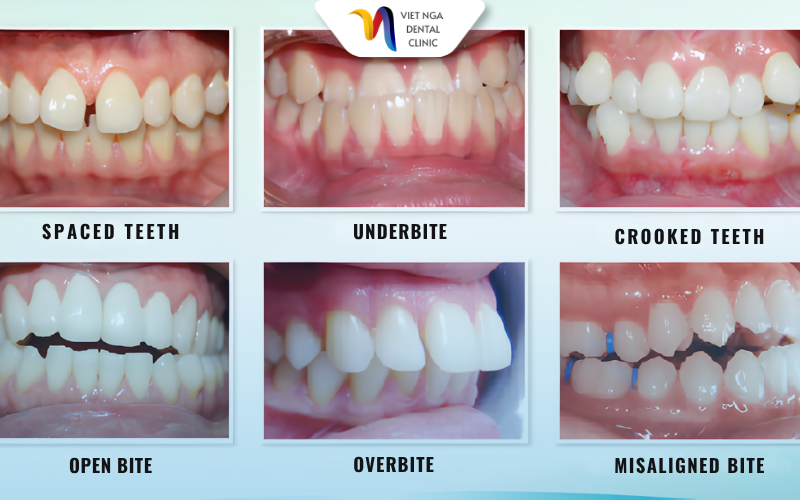
Orthodontic treatment may be recommended if you have:
1. Crowded or crooked teeth (the most common condition, accounting for around 60% of orthodontic cases at Viet Nga).
2. Mild to moderate protrusion (upper front teeth that extend too far forward).
3. An underbite (the lower front teeth sit in front of the upper teeth).
4. Gaps between teeth, particularly between the upper front teeth.
5. Bite problems, including an open bite, crossbite, or deep bite.
6. Misaligned teeth that make oral hygiene more difficult and may increase the risk of tooth decay and gum inflammation.
You may not need orthodontic treatment right away: If your teeth are only mildly crowded, do not affect your oral health, and you are comfortable with your smile, treatment may not be necessary.
At Viet Nga Dental Clinic, our dentists will not recommend orthodontic treatment unless it is genuinely appropriate for your needs. Honest, patient-centered advice is a core principle of our care.
| “The first question I ask every patient is: What are you most unhappy with about your teeth? Your answer determines the treatment approach — not the scanner or the X-ray.” — Dr. Hong |
5 Factors That May Affect the Actual Cost of Your Orthodontic Treatment:
1. Complexity of the dental alignment: More complex cases generally require longer treatment and may involve higher costs.
2. Tooth extraction: Additional extraction fees may apply if tooth removal is required as part of your treatment plan.
3. Additional orthodontic appliances: Some cases may require supporting appliances such as elastics, TADs (temporary anchorage devices), or expanders.
4. Dentist’s expertise and experience: The clinician’s orthodontic training and experience are important factors in planning and managing treatment.
5. Quality of materials and orthodontic appliances: The use of genuine, high-quality orthodontic materials and products can also affect the overall treatment cost.
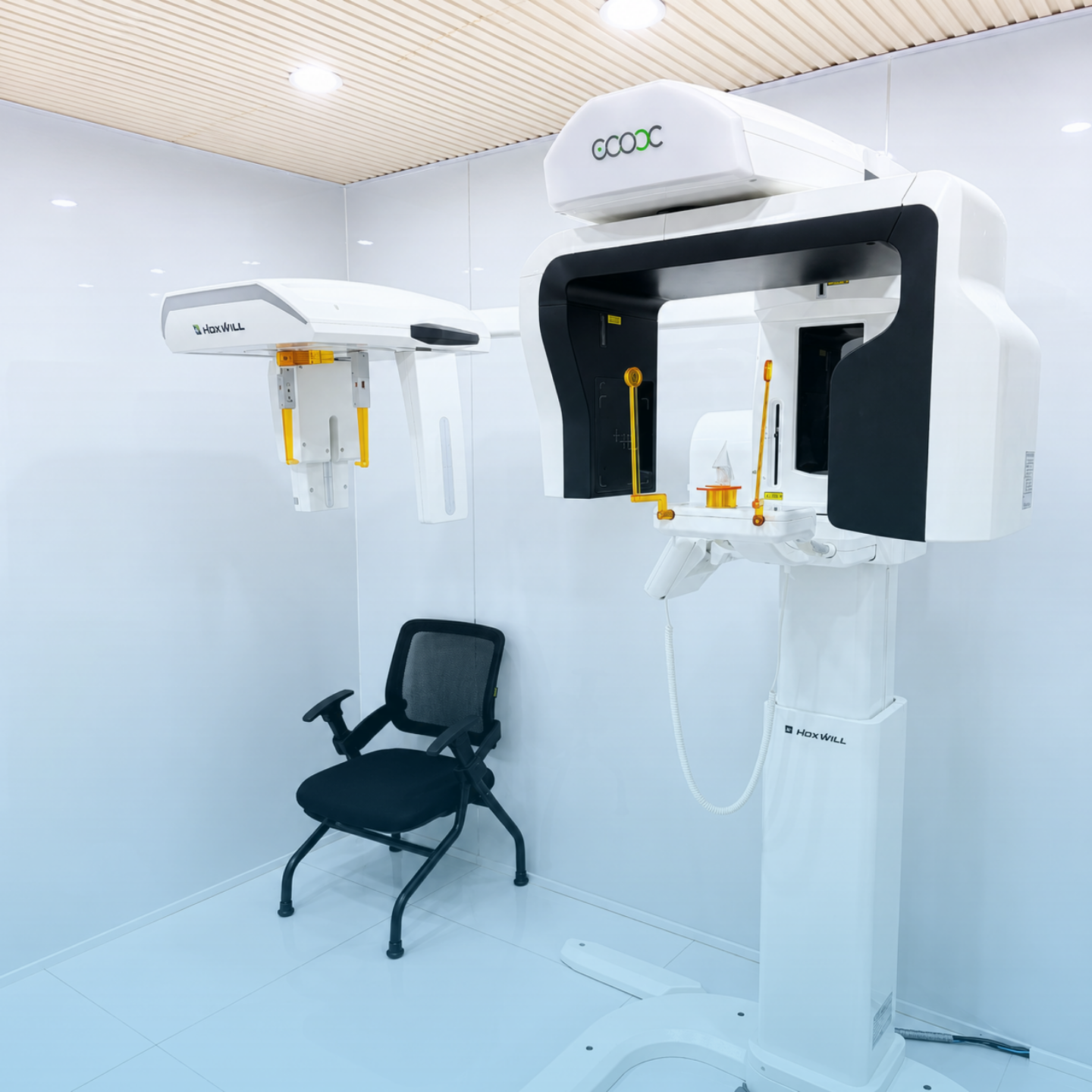
The orthodontist will assess your teeth, jaws, and bite. A panoramic X-ray will be taken to evaluate the position of the tooth roots, impacted or unerupted teeth, and the structure of the jawbone.
For complex cases or cases that may require tooth extraction, a 3D CT scan may also be recommended.
The orthodontist will perform a comprehensive assessment and recommend the most appropriate treatment approach
– including whether tooth extraction is necessary, the expected treatment duration, and the total estimated cost.
This gives you a clear understanding of your orthodontic journey before treatment begins.
For clear aligner treatment, you can preview a 3D simulation of your expected treatment outcome on screen before starting.
This allows you to understand the treatment plan clearly before moving forward.
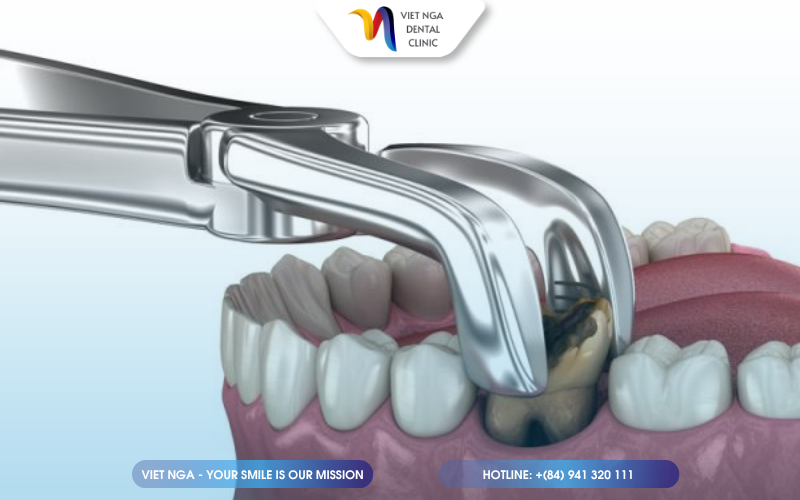
Around 30–50% of orthodontic cases may require the extraction of 1–4 premolars (typically the first premolars) to create enough space for the remaining teeth to move into their proper positions.
Many patients feel concerned about this step. In practice, local anesthesia is used before extraction, and the procedure typically takes around 5–10 minutes per tooth.
Mild soreness may occur for approximately 1–2 days afterward.
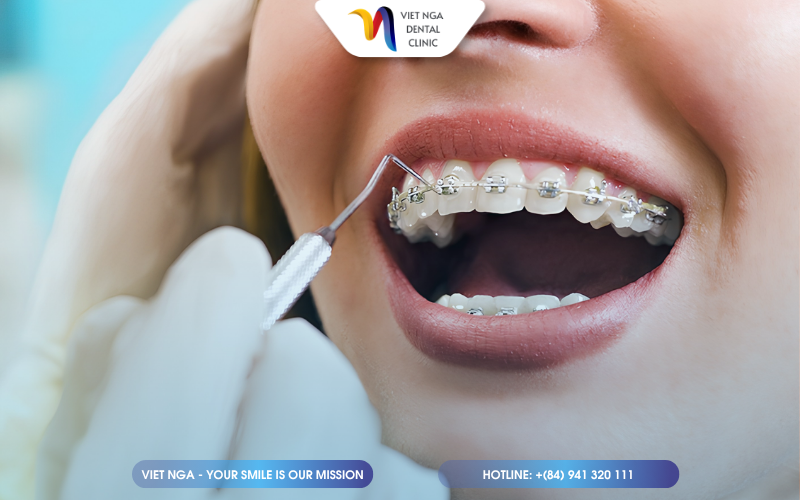
For braces: The orthodontist will bond brackets to each tooth using a specialized dental adhesive and then place the archwire through the brackets.
The entire appointment typically takes around 60–90 minutes.
After braces are placed, you may experience mild soreness for the first 3–5 days. Soft foods are recommended, and you should avoid biting into hard foods during this initial adjustment period.
Most patients gradually adapt and return to their normal daily activities.
For clear aligners: You will receive your first set of aligners and detailed instructions on how to wear and care for them.
Aligners should generally be worn for around 22 hours a day and removed only for eating, drinking anything other than water, and brushing your teeth.
You will change to a new set of aligners every 1–2 weeks according to your treatment plan.
Each new set may cause mild pressure or soreness during the first 1–2 days. This discomfort is generally milder than with braces and usually subsides as you adjust to each new aligner.
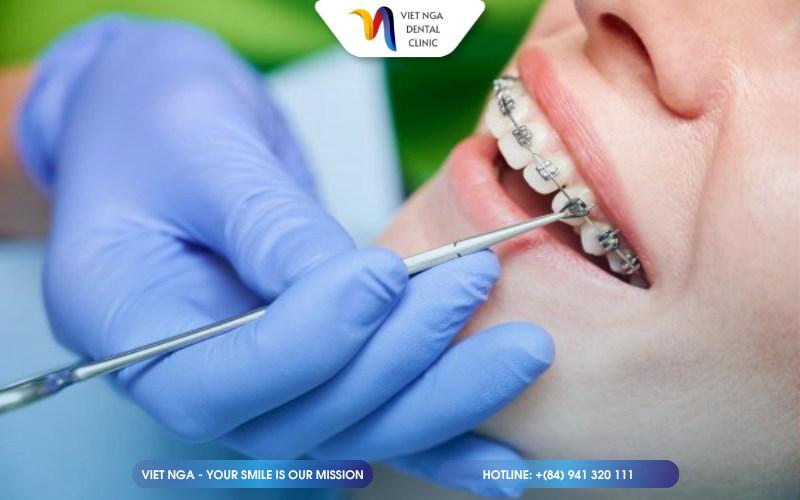
For braces (every 4–6 weeks): The orthodontist will replace or adjust the archwire, fine-tune the applied forces, and monitor your treatment progress.
Each appointment typically takes around 30–45 minutes.
For clear aligners (every 6–8 weeks): The orthodontist will check your current aligners, review your progress, provide the next sets of aligners, and adjust attachments if necessary.
Each appointment typically takes around 20–30 minutes.
The total number of follow-up appointments is usually around 12–18 visits, depending on your treatment duration and individual needs.
Important: Do not skip or delay your scheduled orthodontic appointments. Missed appointments can interrupt treatment progress and may extend the overall treatment time.
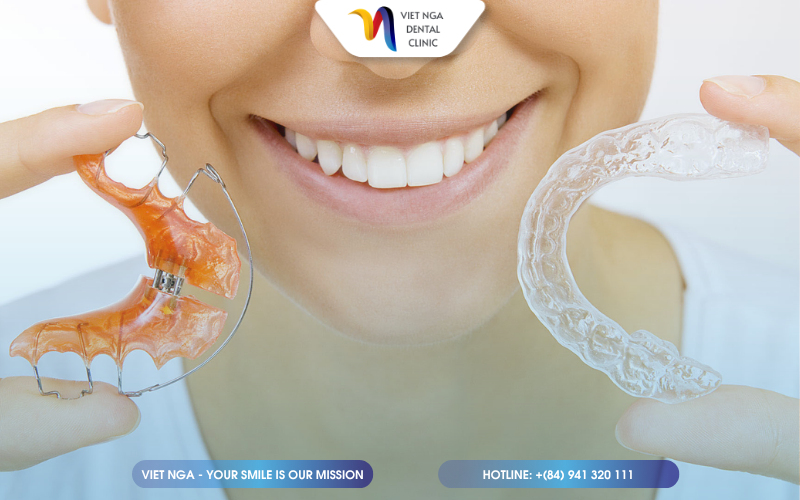
Once your teeth have reached their planned positions and your bite is stable, the orthodontist will remove your braces or complete your final set of clear aligners.
This is the moment when your new smile takes shape — after approximately 12–24 months of consistent treatment and commitment.
Immediately afterward, you will receive a retainer and detailed instructions on how to wear it.
Typically, you will wear the retainer 24/7 during the first 6 months, removing it only for eating and oral hygiene, and then transition to nighttime wear.
Retainers are not optional: They are an essential part of maintaining your orthodontic results because teeth naturally tend to shift after treatment.
The periodontal tissues, ligaments, and surrounding bone need time to adapt and stabilize around the teeth in their new positions.
Without consistent retainer wear, teeth may gradually shift back toward their previous positions. This is one of the main reasons teeth can relapse after orthodontic treatment.
Orthodontic treatment typically takes 12–24 months.
You will see your orthodontist many times throughout the treatment, and the quality of your results depends heavily on accurate case assessment, treatment planning, and precise force adjustment.
If the treatment plan is incorrect from the beginning — such as extracting the wrong teeth, applying inappropriate forces, or underestimating the complexity of the case
— the final result may be compromised regardless of which type of braces is used.
Some patients begin skipping follow-up appointments after a few months because their teeth have already improved significantly and they feel that everything is going well.
In reality: the later stages of orthodontic treatment are particularly important for fine-tuning the bite and stabilizing the teeth in their planned positions.
Missing appointments during this stage can affect the final result.
Each missed appointment without prior notice may add approximately 1–2 months to the overall treatment time.
Brackets and orthodontic appliances create additional areas where plaque can accumulate.
As a result, tooth decay and gum inflammation can occur during orthodontic treatment if oral hygiene is not maintained properly.
During treatment, you should spend a few extra minutes brushing your teeth each time and pay special attention to the areas around the brackets and along the gumline.
It is a simple step, but an important one for protecting your teeth throughout your orthodontic journey.
This is one of the most common mistakes — and one with very noticeable consequences.
After the first 6 months of full-time retainer wear, many patients gradually reduce their retainer use or stop wearing it altogether because their teeth “look fine.”
The result: over the following 1–2 years, the teeth may gradually shift back toward their previous positions.
Our team of orthodontists has treated more than 5,000 orthodontic cases of varying levels of complexity.
Thanks to this experience, our dentists have developed the expertise to manage everything from straightforward alignment concerns to complex bite problems.
As a result, each treatment plan can be tailored to the individual needs of every patient.
Each orthodontic method has its own advantages.
Therefore, our orthodontists recommend metal braces, ceramic braces, or clear aligners based on your dental condition, treatment goals, lifestyle, and individual needs.
The goal is to find the most appropriate solution for you — not simply the most expensive option.
Orthodontic treatment is more than simply placing brackets or providing aligners.
Before treatment begins, your orthodontist will carefully assess your bite, jaw structure, tooth alignment, and facial proportions.
Based on this assessment, a personalized treatment plan is developed to improve both the appearance of your smile and long-term oral function.
Orthodontic treatment is a journey that typically takes 12–24 months.
Throughout the process, your orthodontist will monitor your progress through regular follow-up appointments, adjust the applied forces, and track tooth movement.
This ongoing supervision helps keep your treatment on track and aligned with the planned outcome.
“I had my braces for two years with Dr. Hong. What I remember most wasn’t the day my braces came off — it was how clearly she explained everything from the very beginning. After 24 months, I have a smile that makes me feel much more confident. I’m very grateful to Dr. Hong.” — Ms. Huyen, 32, Vung Tau. |
1. Do braces hurt?
Not usually. Mild soreness may occur for 3–5 days after each wire adjustment, or for 1–2 days after each aligner change.
The discomfort typically subsides completely before the next adjustment.
2. What is the best age to get braces?
Ages 8–12 are often considered an ideal time to begin orthodontic evaluation because the jaw is still developing, making certain corrections more responsive and potentially reducing treatment time.
Adults can also have orthodontic treatment at almost any age.
Because adult bone is more mature, treatment may take 2–4 months longer in some cases than in children, while achieving comparable results when the treatment plan is appropriate.
3. Will I need to have teeth extracted for braces?
Approximately 30–50% of orthodontic cases may require the extraction of 1–4 premolars, commonly the first premolars, to create sufficient space for the teeth to move into their planned positions.
However, extraction is not necessary for every patient. The decision depends on the degree of crowding, bite relationship, facial profile, and overall jaw structure.
4. Are clear aligners or braces better for my case?
There is no one-size-fits-all answer!
Clear aligners are often suitable for: mild to moderate crowding, patients who prefer a more discreet treatment option, and cases where the required tooth movements fall within the capabilities of the aligner system.
Braces may be more suitable for: severe protrusion, complex bite problems, cases requiring multiple extractions, or situations where treatment effectiveness is prioritized over aesthetics.
5. Will my teeth shift back after orthodontic treatment?
Not if you wear your retainer as instructed. Teeth naturally tend to move over time, particularly if retainers are not worn consistently.
Retainers are generally comfortable to wear and can help maintain the results achieved through orthodontic treatment.
For long-term stability, your orthodontist will recommend an appropriate wearing schedule based on your individual case.
There is no single fixed price for orthodontic treatment because every case is different.
The most accurate way to determine the treatment cost, duration, and method best suited to you is to have your X-ray reviewed and undergo an in-person orthodontic assessment.
Your initial consultation includes X-rays, a one-on-one consultation with Dr. Hong, and a detailed treatment quote tailored to your case — completely free of charge.
Treatment outcomes vary depending on individual factors and patient cooperation, particularly during the retention phase.
This article has been reviewed by Dr. Hong — Orthodontic Specialist at Viet Nga Dental Clinic, Vung Tau.