


8+ years of Implant Experience · 1,000+ cases successfully treated.
Specialist Level I – Specialized in Implant Dentistry & Implant Restoration.
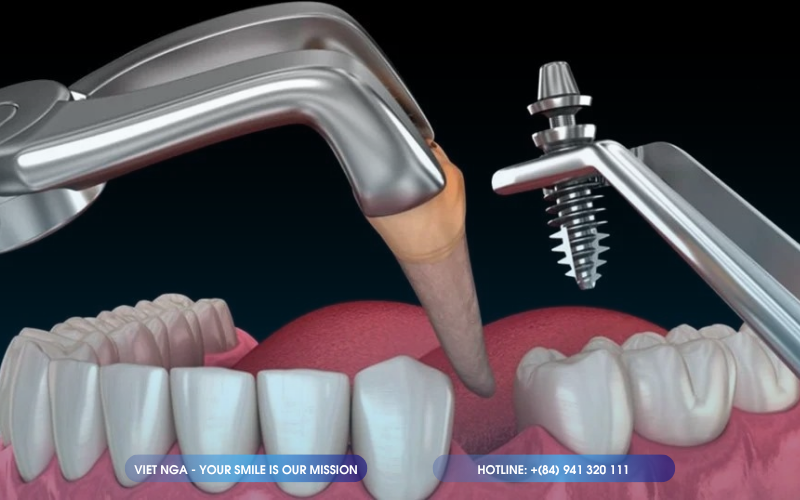
Dental Implant Treatment (also known as Dental Implant Placement) is a technique that uses a small titanium implant fixture — typically 3–4 mm in diameter and 8–16 mm in length
— placed directly into the jawbone to replace the root of a missing tooth.
Titanium is a highly biocompatible material. It is designed to integrate with the body and is highly resistant to corrosion.
After the implant integrates with the jawbone, a biological process known as osseointegration that typically takes 2–4 months.
The dentist attaches an abutment and crown to the implant, creating a complete tooth replacement that restores both function and appearance.
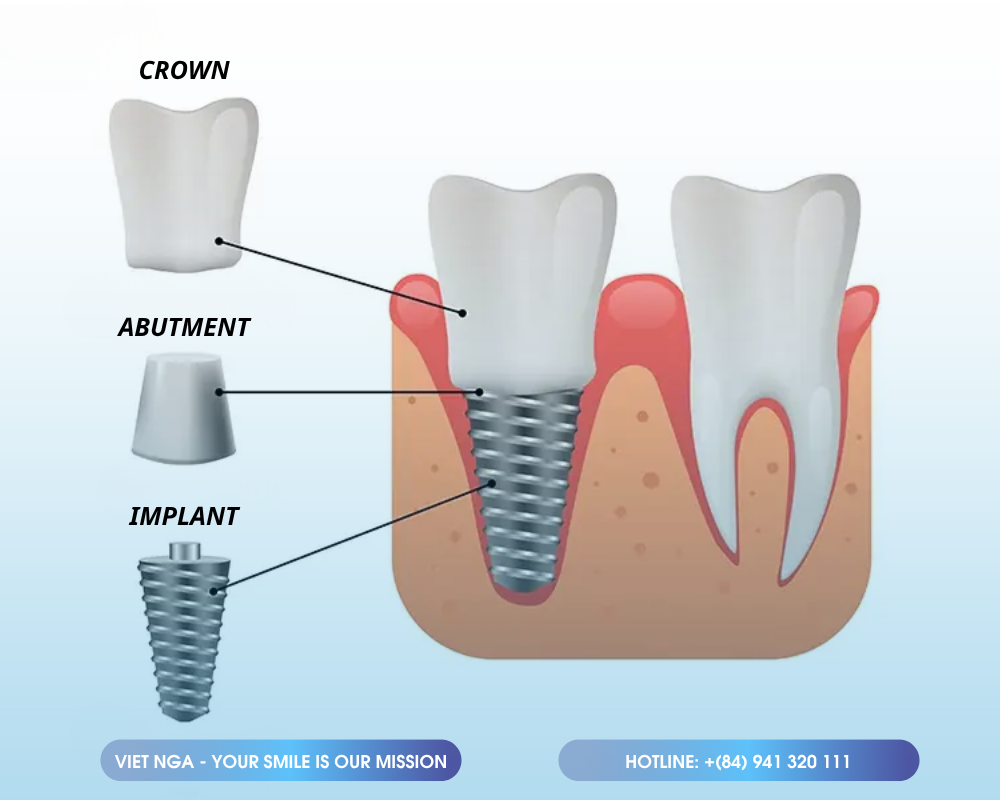
1. Implant Fixture is the component placed within the jawbone and functions much like the root of a natural tooth — transferring chewing forces to the bone and helping maintain bone density.
2. Abutment is the connecting component between the dental implant fixture and the dental crown above it.
3. Crown is the visible part of the restoration, custom-made to match the color and shape of the patient’s remaining natural teeth.
How Dental Implants Differ from Traditional Dental Bridges: A traditional dental bridge requires the two healthy teeth adjacent to the missing tooth to be prepared as supporting teeth
— in other words, two healthy teeth may need to be altered to replace one missing tooth.
A Dental Implant, by contrast, functions independently and does not require modification of the neighboring teeth.
Over the long term, Dental Implants can also help preserve the jawbone by addressing the bone loss that naturally occurs following tooth loss when the area is not restored.
“Dental Implant Treatment is not simply about placing a titanium implant. More importantly, it is about helping patients regain their ability to chew, their confidence, and a stable foundation for the years ahead.” — Dr. Thai Tai |
When Is Further Assessment Needed?
Certain medical conditions may require additional evaluation before Dental Implant Treatment, including:
Dr. Thai Tai will assess each patient’s individual condition using a 3D CT scan — provided free of charge — before making any treatment recommendation.
This is the most important and also the first step.
The dentist will perform a comprehensive examination of your oral health and then recommend a 3D CT scan using a Cone Beam CT scanner at the clinic.
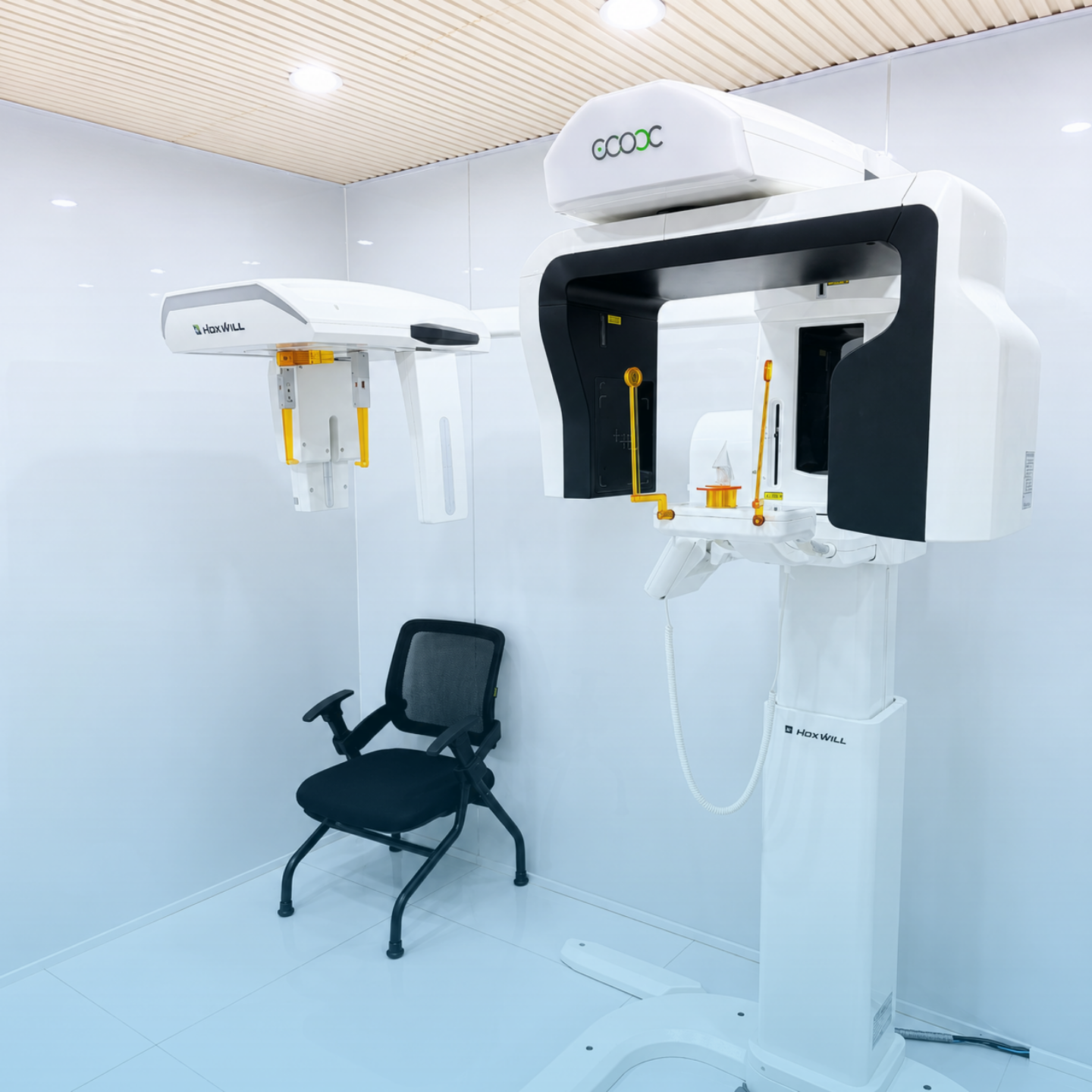
The 3D CT scan accurately shows the height, width, and density of the jawbone at the implant site — information that conventional X-rays cannot provide.
Based on these findings, the dentist will develop a specific treatment plan, including the implant position, appropriate implant type, number of implants, expected treatment duration, and cost.
This allows you to fully understand your condition before making any decision.
Around 20–30% of cases may require one or both of the following preparatory procedures.
Bone Grafting: If the jawbone is too thin or has insufficient density, the dentist may perform bone grafting to create a stable foundation before implant placement.
After bone grafting, a healing period of 2–4 months is typically required for the grafted bone to integrate before proceeding to the next step. 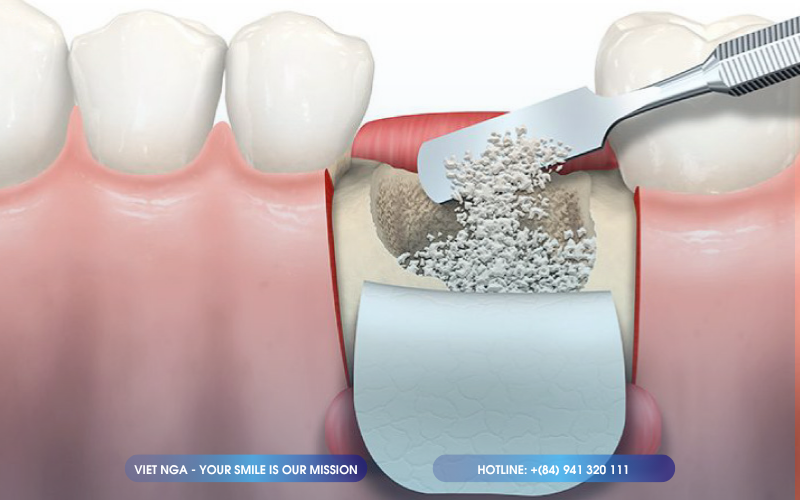
Extraction of a Damaged Tooth: If a tooth remains at the planned implant site and needs to be removed, the dentist will perform the extraction first and allow the gum tissue to heal for 4–8 weeks.
In some cases, the implant may be placed immediately after extraction.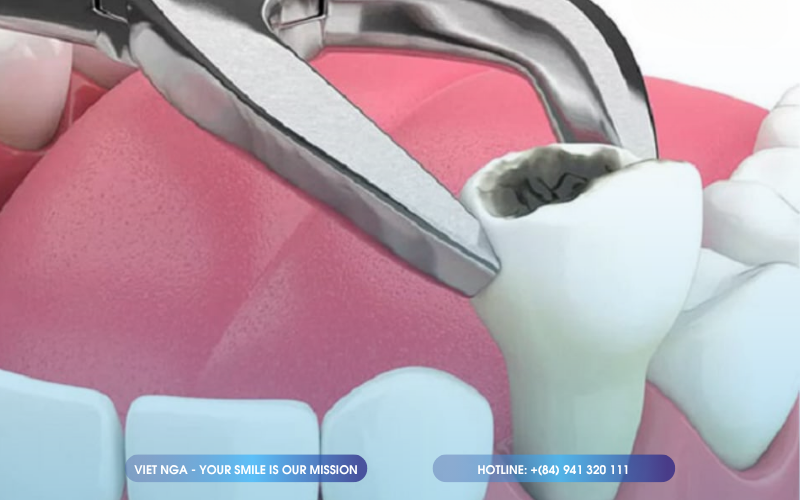
Local anesthesia is administered to completely numb the implant site, so you should not feel pain during the procedure.
The dentist makes a small incision in the gum and prepares a precise opening in the jawbone according to the angle planned from the 3D CT scan.
The titanium implant fixture is then placed into the jawbone and the area is sutured. The entire procedure typically takes around 30–60 minutes per implant.
Immediately after the procedure, you can return home without needing to stay at the clinic.
You will need to take antibiotics and pain medication as prescribed by the dentist for 3–5 days. You should also follow a soft-food diet around the implant site for 1–2 weeks.
What to Expect:
During implant placement: there is generally no pain because of local anesthesia. After the anesthesia wears off, mild soreness may occur during the first 2–3 days and can usually be managed with Paracetamol.
Most patients describe this sensation as significantly milder than that experienced after wisdom tooth extraction.
 Important: The level of soreness after Dental Implant placement varies from person to person. Cases requiring Bone Grafting may involve swelling and soreness for 3–5 days. Important: The level of soreness after Dental Implant placement varies from person to person. Cases requiring Bone Grafting may involve swelling and soreness for 3–5 days. |
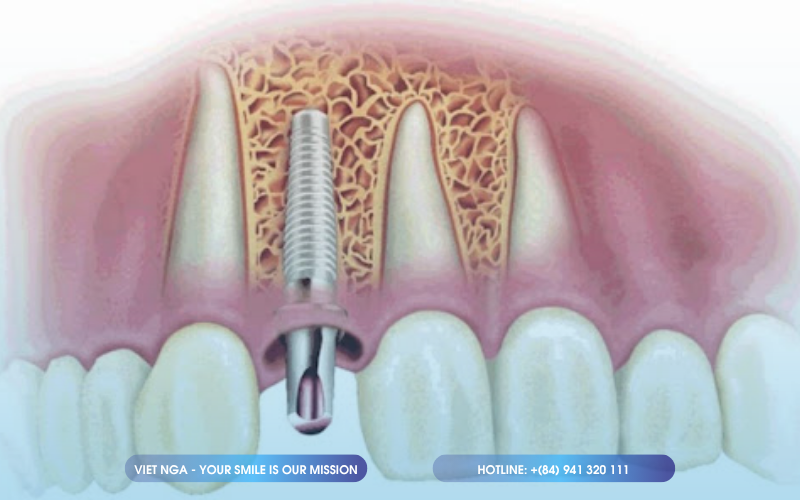
This is the stage during which the jawbone gradually integrates with the titanium surface of the implant, creating a stable biological connection similar to a natural tooth root.
With Straumann implants using SLActive surface technology, the integration period may be reduced to approximately 6–8 weeks compared with 3–4 months for conventional implant surfaces.
During this stage, you can continue your normal daily activities.
You may wear a temporary tooth if the implant is in an aesthetically important area, eat soft foods around the implant site, and avoid excessively hard or chewy foods.
You generally do not need to take time off work or follow complicated restrictions.
Especially for patients from Ho Chi Minh City and overseas Vietnamese: You do not need to stay in Vung Tau throughout this healing period.
The entire process may require only two visits to Vung Tau: the first for implant placement and the second after 2–4 months for the placement of the dental crown.
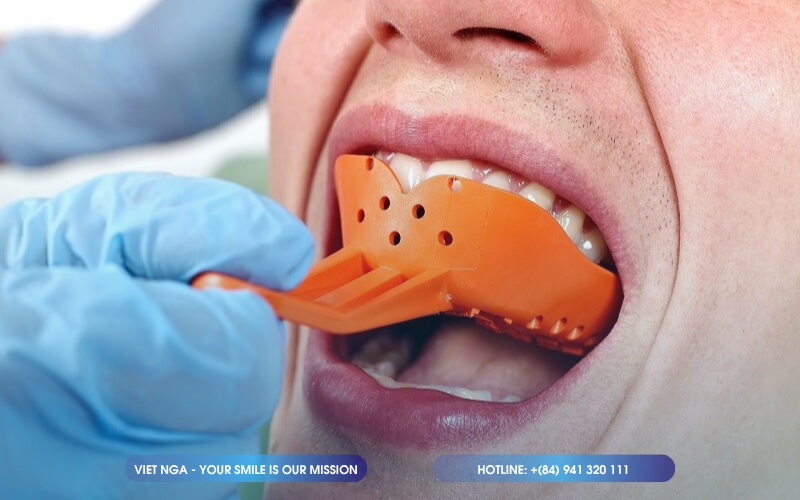
After sufficient healing and integration time, the dentist will take an X-ray to confirm that the implant is fully stable.
The dental impression is then taken using either a digital 3D scan or a traditional impression and sent to the dental laboratory for crown fabrication.
During this appointment, the dentist will work with you to select a crown shade that matches the natural color of your remaining teeth using the standard Vita shade guide.
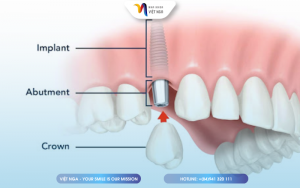
After approximately 1–2 weeks of laboratory fabrication, the dentist will attach the abutment to the Dental Implant and place the dental crown.
The dentist will check your bite, make any necessary adjustments, and confirm that you are comfortable before permanently securing the restoration.
After this appointment, you can return to normal eating and drinking.
The usual follow-up schedule is: 1 week, 1 month, 3 months, 6 months, and 1 year after the crown is placed.
Dental implants are covered according to each manufacturer’s warranty policy, typically ranging from 5–15 years. Dental crowns are covered for 5–10 years depending on the material.
To maintain warranty coverage, follow the recommended follow-up schedule and have professional dental cleaning every 6 months.
Not all Dental Implants are the same.
Surface quality, osseointegration speed, durability, and warranty policies can vary significantly between brands.
At Viet Nga Dental Clinic, Dr. Thai Tai uses four main implant brands to meet different treatment needs and budgets:
| Brand | Origin | Key Technology | Implant Warranty | Best Suited For |
| Straumann | Switzerland | SLActive surface — up to 50% faster osseointegration | Lifetime* | Patients seeking premium quality and complex cases. |
| Kontact | France | Advanced SLA / Oxidized surface technology for enhanced osseointegration compared with conventional implant systems. | 20 years | Cases requiring complex restorative solutions |
| Megagen | South Korea | Widely used across Asia, with reliable and stable quality | 10 years | Patients seeking a balance between quality and cost |
Understanding what “lower cost” means: Osstem and Dentium implants are not necessarily lower quality — they have clinical research supporting their use and may achieve comparable success rates.
The main differences include the speed of osseointegration (Straumann may integrate faster), long-term surface durability, and manufacturer warranty policies.
Dr. Thai Tai will recommend the most appropriate implant after reviewing your 3D CT scan
— not necessarily the most expensive option, but the one that best matches your jawbone condition and long-term expectations.
Dental Implant costs at Viet Nga primarily depend on 3 factors: the implant type, the number of implants required, and whether Bone Grafting is necessary. Below is a reference price range:
| Category | Implant Type | Reference Price (Full Package) |
| South Korea | Megagen | VND 20,000,000 |
| France | Kontact | VND 30,000,000 |
| Premium – Switzerland | Straumann | VND 45,000,000 |
| All-on-4 (Full Arch) | Depending on implant type | From VND 80,000,000–180,000,000 |
Why Should You Not Choose the Cheapest Clinic? Some clinics may advertise lower prices by using implants with unclear origins or adding additional fees later. At Viet Nga, you receive a comprehensive quotation and know exactly which implant system will be used, along with transparent warranty policies. |
Installment Plans: Viet Nga offers direct 0% interest installment plans without third-party intermediaries. Ask us for details.
With more than 8 years of experience specializing in Dental Implants and more than 1,000 successful treatment cases.
Dr. Thai Tai has personally treated cases ranging from single-tooth replacement to complex procedures, including All-on-4/6 and simultaneous Bone Grafting.
This demonstrates the clinical expertise of the dentists at Viet Nga Dental Clinic.
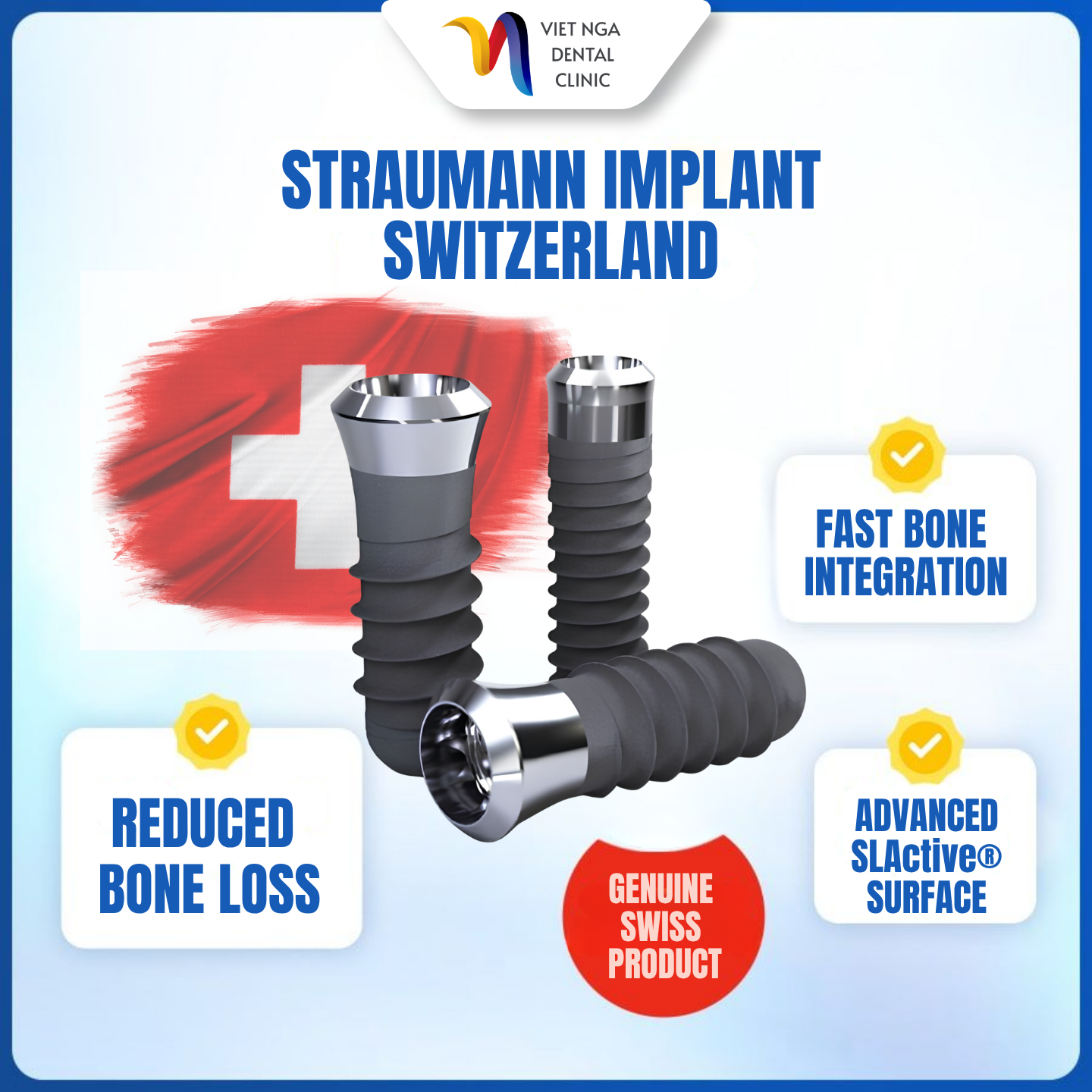
Viet Nga Dental Clinic uses genuine Dental Implant systems from Megagen, Kontact, and Straumann to meet a wide range of treatment needs.
Each implant has a Serial Number for traceability and is recommended according to the patient’s specific tooth-loss condition, with a transparent warranty policy.
As a result, patients can feel confident throughout the treatment process.
Before every Dental Implant procedure, patients receive a 3D Cone Beam CT scan to comprehensively assess the jawbone.
Based on the 3D images, the dentist analyzes the anatomical structures and develops an accurate treatment plan.
The implant position is also precisely planned according to each individual case. This helps make treatment safer, more effective, and improves the likelihood of a successful Dental Implant procedure.
| 11 | 20,000+ | 3,000+ | 98% |
| Years in Operation | Patients Served | Successful Dental Implant Cases | Osseointegration Rate |
After 11 years of operation, Viet Nga Dental Clinic is proud to have served more than 20,000 patients from Vietnam and abroad.
More than 3,000 Dental Implant cases have been completed with an osseointegration rate of over 98%.
Each treatment is personalized and performed according to a standardized process. This is the foundation of the trust placed in Viet Nga by thousands of patients.
Patients traveling from other locations only need two treatment visits to complete All-on-4 or All-on-6.
During the first visit, Dental Implants are placed and temporary teeth are provided according to the treatment plan.
After approximately 3–6 months, the patient returns for 2–3 days to have the final fixed dental prosthesis placed. This treatment schedule helps save time and reduce travel costs.
“I came down from Ho Chi Minh City after hearing that the quality was comparable to HCMC but the prices were better. After having Dental Implants placed for both arches, I found the distance well worth the value. Now I can comfortably eat corn and beef — things I hadn’t dared to eat for the past five years.” — Mr. Tu, 58, Ho Chi Minh City. |
1. Do Dental Implants hurt?
During implant placement: local anesthesia is used, so the procedure is generally painless. Many patients are surprised by how much more comfortable the procedure is than they expected.
After returning home: mild soreness may occur during the first 2–3 days. This is generally much less intense than wisdom tooth extraction and can usually be managed with standard pain medication.
2. How long does Dental Implant Treatment take?
Simple cases (good bone quality, using Straumann SLActive implants): as little as approximately 3 months.
Moderate cases (conventional implant systems): approximately 4–6 months.
Complex cases requiring Bone Grafting: approximately 6–9 months. All-on-4 Immediate Loading: temporary teeth can be placed on the same day, with the final fixed prosthesis placed after 3–6 months.
3. Who may not be suitable for Dental Implants?
Patients with severe uncontrolled diabetes, severe heart conditions requiring anticoagulant medication that cannot be discontinued, or those currently undergoing radiation therapy to the head and neck region.
These cases require detailed medical evaluation. They do not automatically mean that Dental Implant Treatment is impossible, but a more carefully planned approach may be required.
4. Can a Dental Implant fail or fall out?
The reported success rate is approximately 95–98% based on international clinical data.
Implant failure is uncommon and is often associated with heavy smoking, infection caused by inadequate oral hygiene, or failure to attend follow-up appointments.
5. How long are Dental Implants covered by warranty?
Straumann implants: covered under the manufacturer’s policy for a lifetime in many cases.
Other implant systems may be covered for 5–10 years. Dental crowns: 5–10 years depending on the material.
Important: Attend follow-up appointments as scheduled and have professional dental cleaning regularly.
6. What is the difference between a single Dental Implant and All-on-4?
A single Dental Implant uses 1 implant fixture to replace 1 tooth. All-on-4 uses 4 implants to support approximately 12–14 teeth as a complete arch restoration.
All-on-4 is designed for patients who have lost multiple or all teeth in one arch and can be a more economical and effective solution than replacing each missing tooth with an individual implant.
Your information is now sufficient to understand whether Dental Implant Treatment may be suitable for you.
The next step is to schedule an in-person consultation with a dentist at Viet Nga Dental Clinic.
Patients receive a clinical examination, a 3D Cone Beam CT scan, and a personalized treatment plan.
All information regarding treatment costs, duration, and treatment options is provided transparently. You can make your decision after fully understanding the proposed treatment plan.
 Book a Free Dental Implant Consultation + 3D CT Scan with Dr. Thai Tai
Treatment outcomes vary depending on each individual’s biological characteristics and jawbone condition.
The 95–98% success rate is based on international clinical data. This article has been reviewed by Dr. Thai Tai — Dental Implant Specialist at Viet Nga Dental Clinic, Vung Tau.